Scandinavian Jazz Trio – Bossa Beguine

THREE SCANDINAVIANS IN A TIGHT SPACE
Under the catalogue number VHJD-358, Venus Records is releasing the debut album of the Scandinavian Jazz Trio, and whoever follows the grand piano in the title track hears a stage that grants it more room than in the end does the music good: the high registers at left, the low at right, drawn across the entire width. Whether this division proves to be a confident placement by the recording engineer or a concession to the look of the panorama is decided only in the listening room, for a stage laid open in this way betrays either a sure ear or a hesitant one, and in the first bars both still sound equally convincing.
That a Swedish, a Norwegian and a Danish musician appear together for the first time under this trio name raises expectations anyway, and that their label has for more than three decades been committed to its own idea of analogue sonic fidelity sharpens them further. Whoever engages with a recording from Tetsuo Hara’s house expects restraint in the service of the music and not its distortion into an effect of its own signature. It is by this yardstick that this pressing must be measured.
TECHNICAL DATA
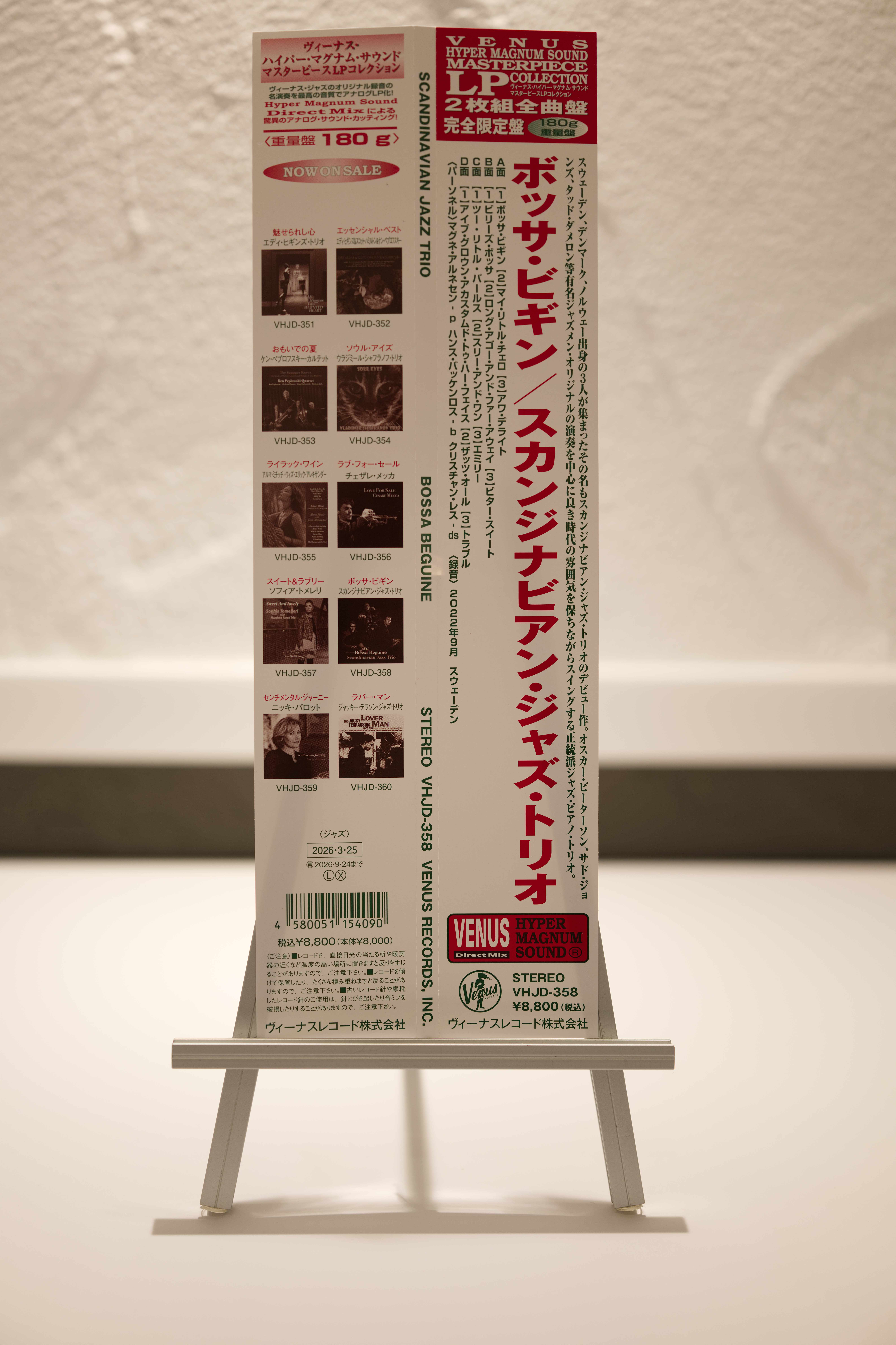
- Artist / Album: Scandinavian Jazz Trio – Bossa Beguine
- Label: Venus Records (Venus Masterpiece LP Collection)
- Catalogue number: VHJD-358
- Recording: 16 and 17 September 2022, Yardhouse Studio, Stockholm (label’s information)
- Year of original release: 2023 (CD, 25 January 2023)
- Year of release of this pressing: 25 March 2026
- Pressing plant: not known (pressed in Japan according to the distributor)
- Producer: Tetsuo Hara
- Mixing: Tetsuo Hara
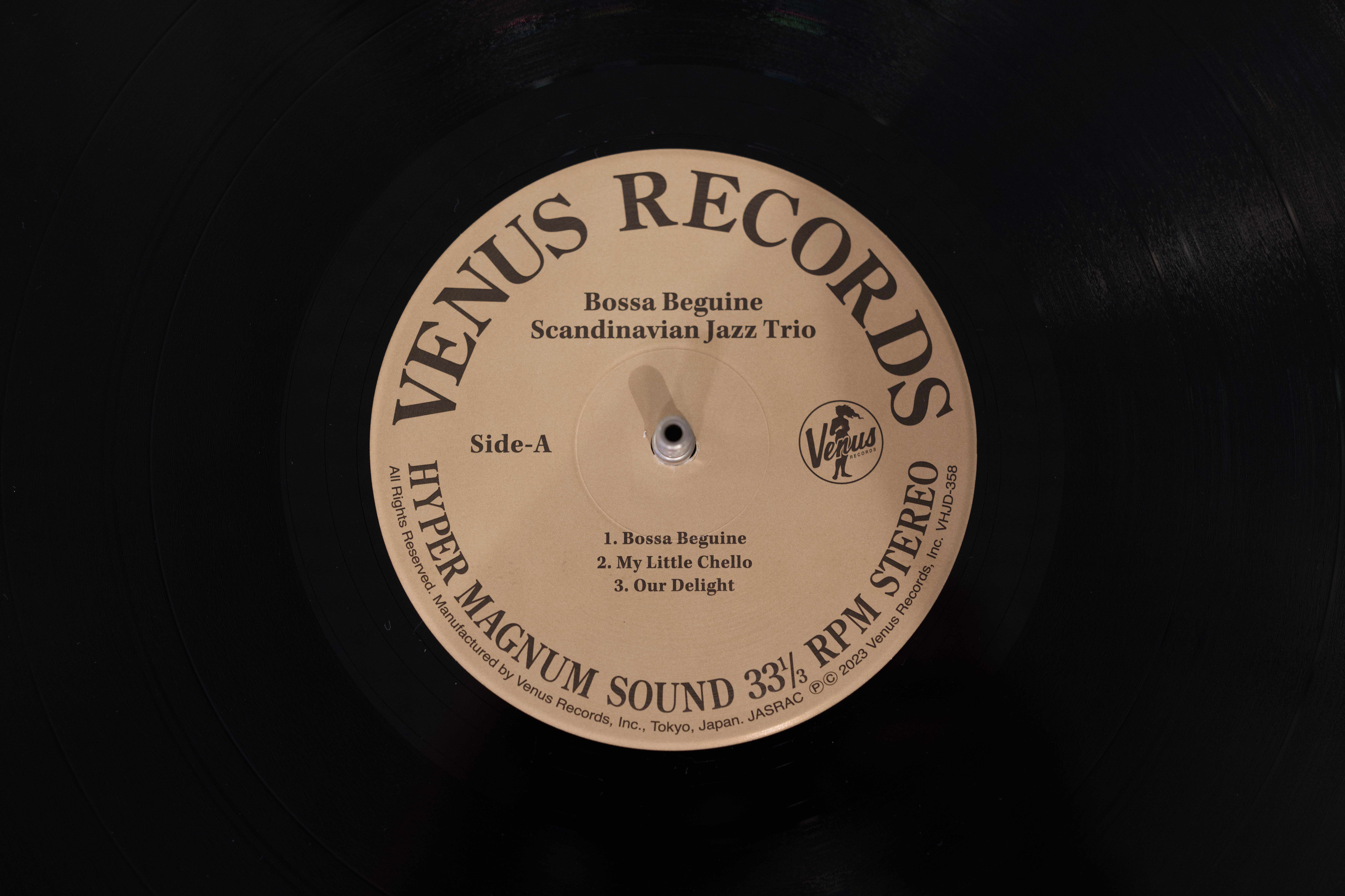
- Mastering: Tetsuo Hara (Venus Hyper Magnum Sound)
- Vinyl weight: 180 g
- Format: Double LP, gatefold cover with obi strip
- RRP: €89
ARTIST AND ALBUM IN HISTORICAL CONTEXT
Three established voices of the Scandinavian scene come together here for the first time under a shared name: the Norwegian Magne Arnesen on piano, the Swede Hans Backenroth on double bass and the Dane Kristian Leth on drums. Backenroth brings the weight of a career that has left hardly a corner of the Swedish jazz scene untouched. Trained at the Royal Conservatory of Music in Stockholm, he became a member of the Fredrik Norén Band while still a student, over the following decades played his way to the side of Monica Zetterlund, Arne Domnérus and Bernt Rosengren, and is valued internationally by Scott Hamilton as much as by Toots Thielemans. When Arnesen and Leth join this wealth of experience, three signatures meet which are only now, in this recording, trying themselves out together for the first time.
“Bossa Beguine” was recorded on 16 and 17 September 2022 at Yardhouse Studio in Stockholm, under the direction of Tetsuo Hara, who has run the label from Tokyo since 1992 after previously working as a producer for RCA Victor. His productions still follow an old-fashioned principle: all the musicians play at the same time in the same room, the stereo mix is made directly on site, and the recording receives its final polish only in the label’s own studio in Japan. The trio’s repertoire consists of their own interpretations of compositions by Oscar Peterson, Thad Jones and Tadd Dameron, delivered in the spirit of the swing tradition, occasionally with a Brazilian inflection, as the title already suggests.
THIS EDITION / PRESSING
The album originally appeared as a CD in January 2023, before Venus now takes it into its own Masterpiece LP series and releases it as a strictly limited double LP, cut at 33 rpm, on 180-gram vinyl, pressed in Japan and packaged in a gatefold cover with obi strip. As is usual with the label’s vinyl editions, this pressing too is made only once and taken out of the catalogue as soon as the run is sold out, which makes acquiring it a decision with an expiry date. On the exact release date the distributors’ details differ slightly, end of March or beginning of April 2026; the run itself is unaffected.
PACKAGING
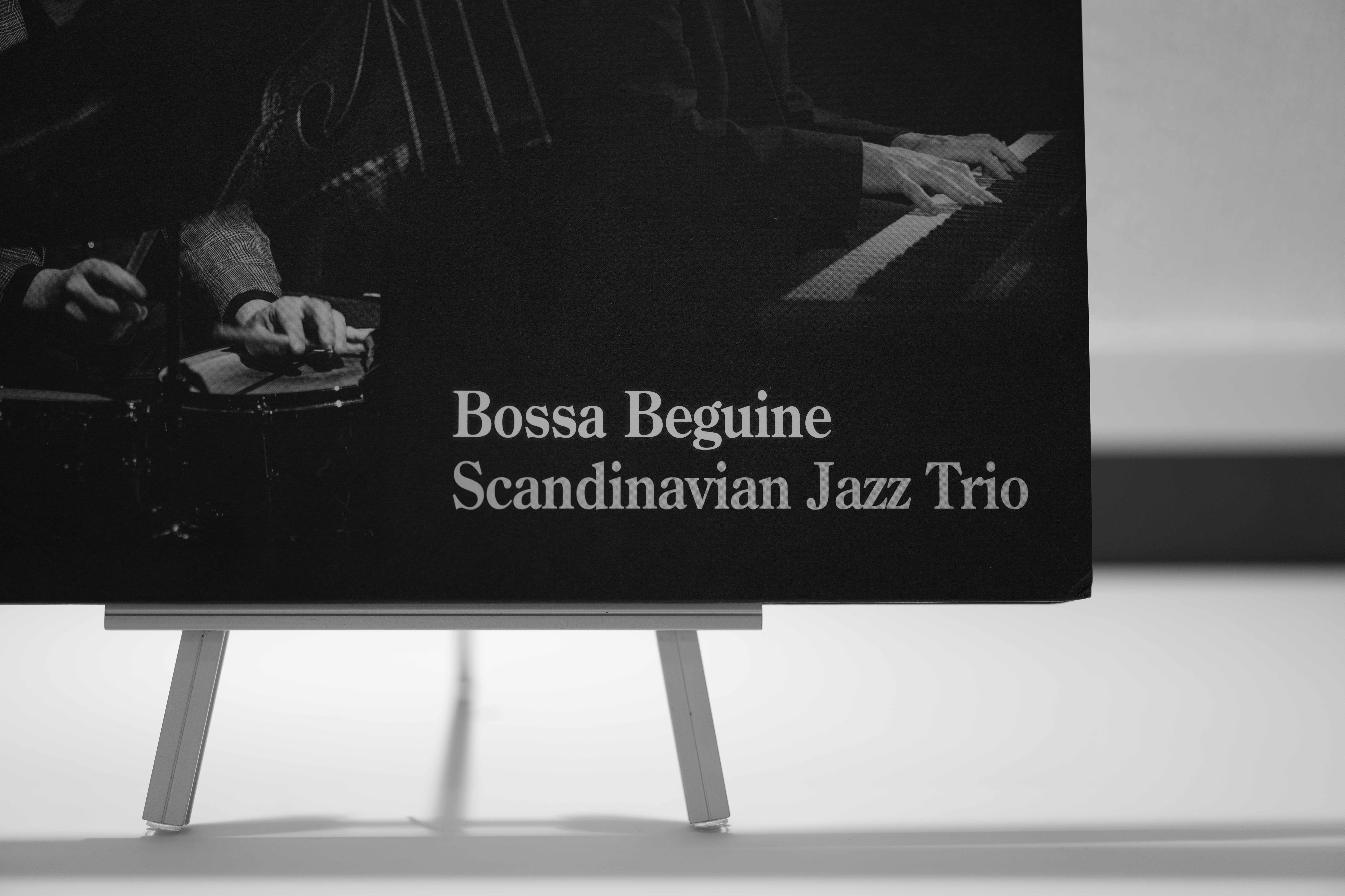
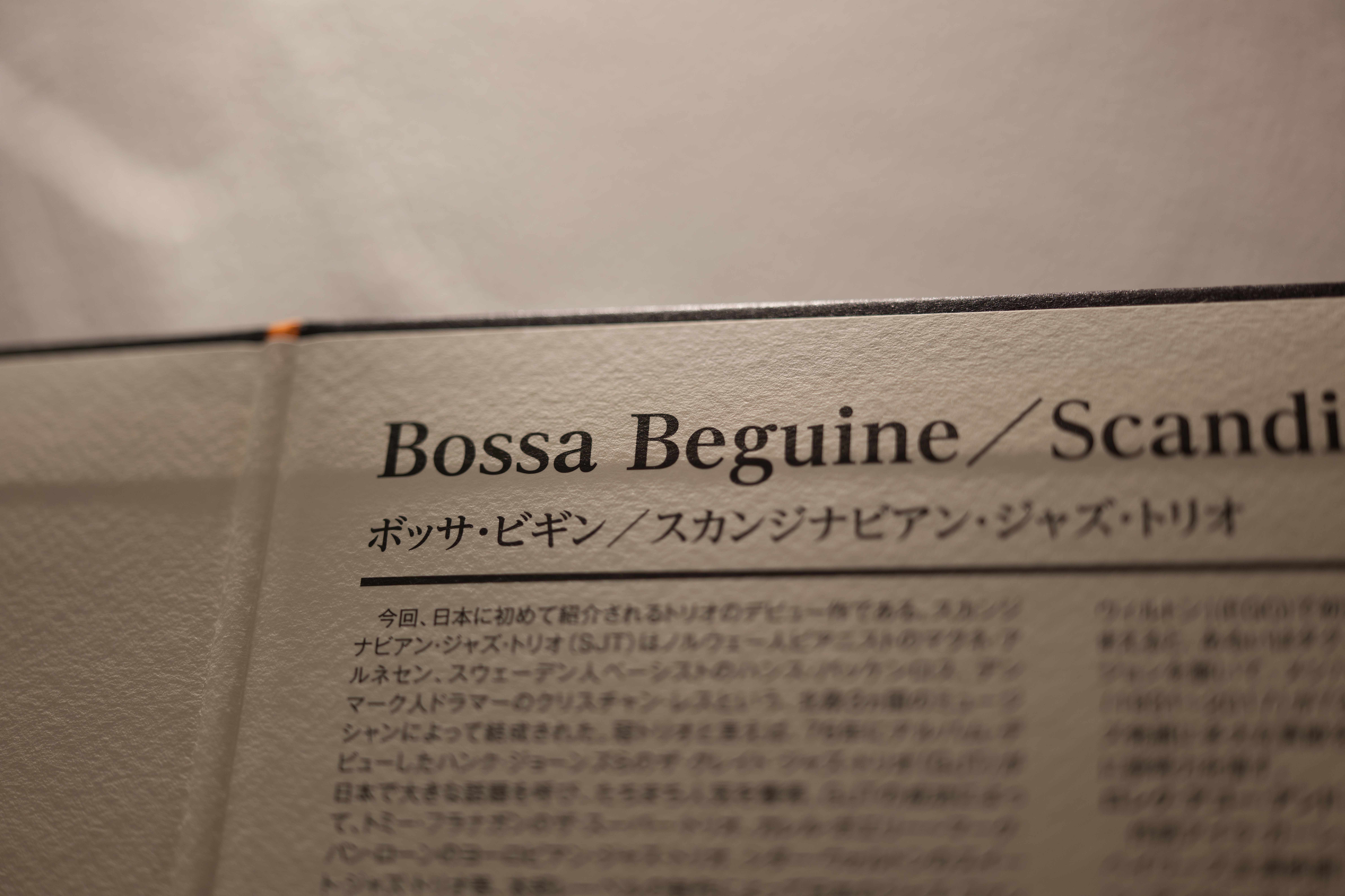
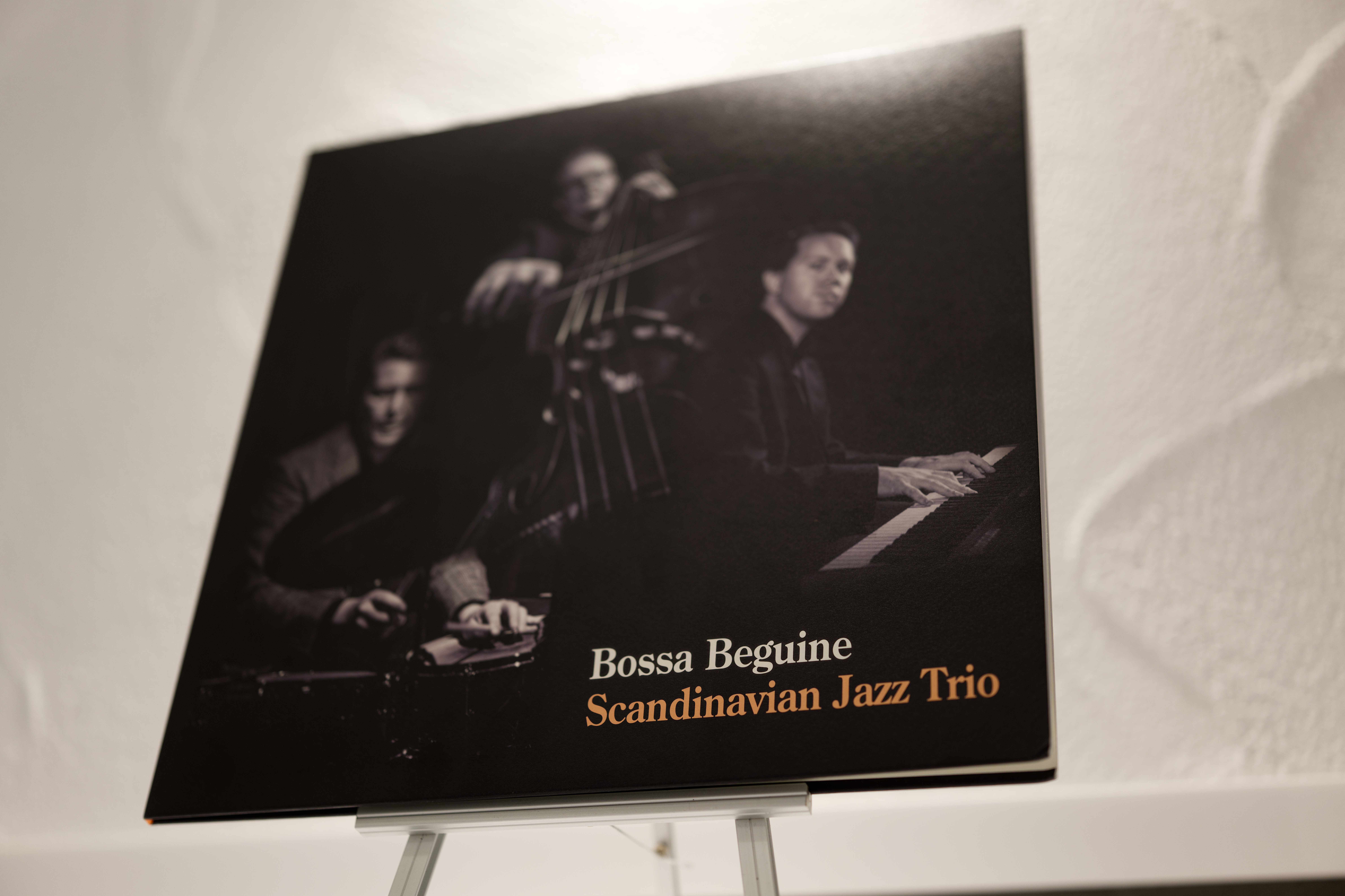
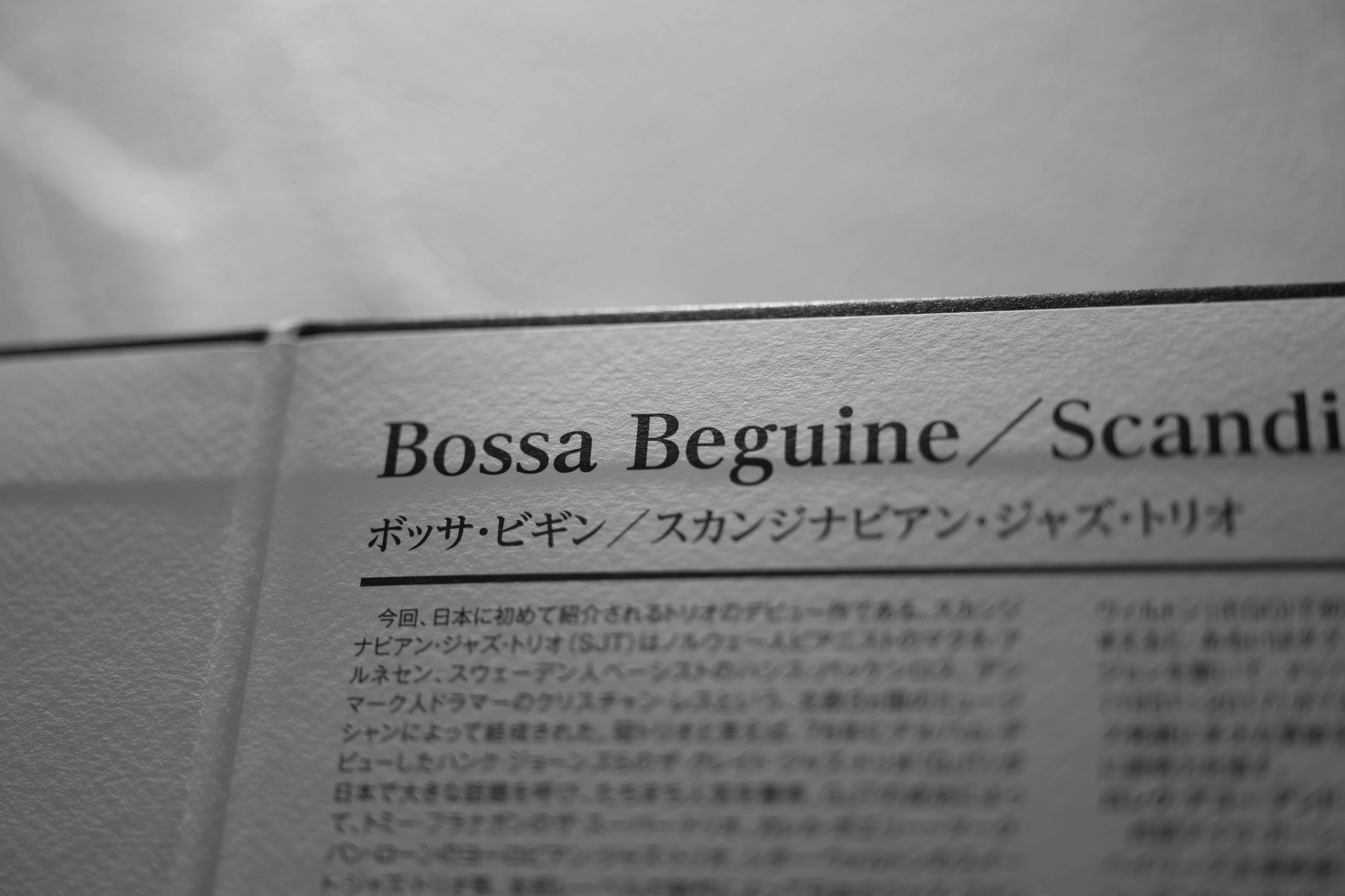
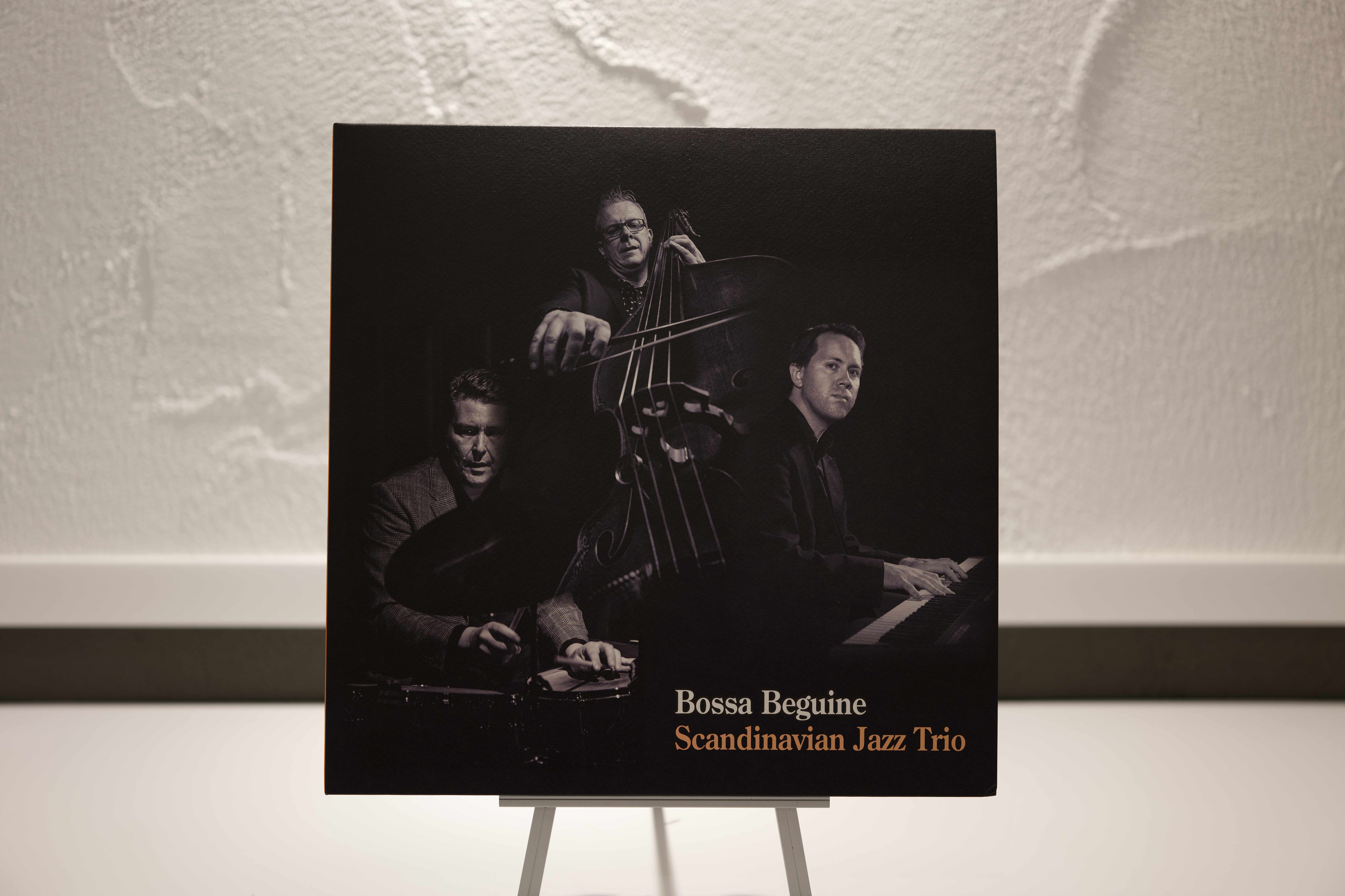
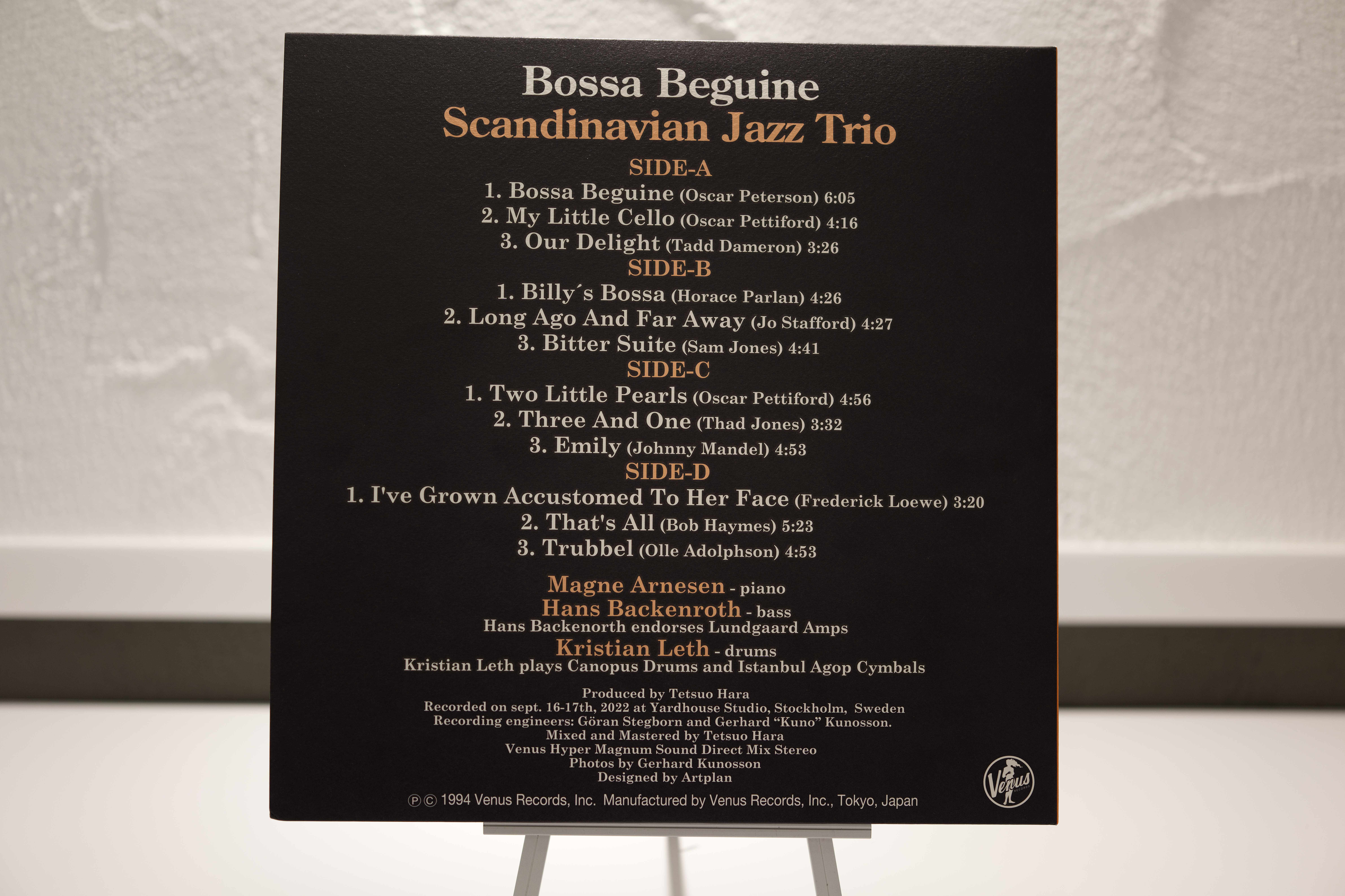
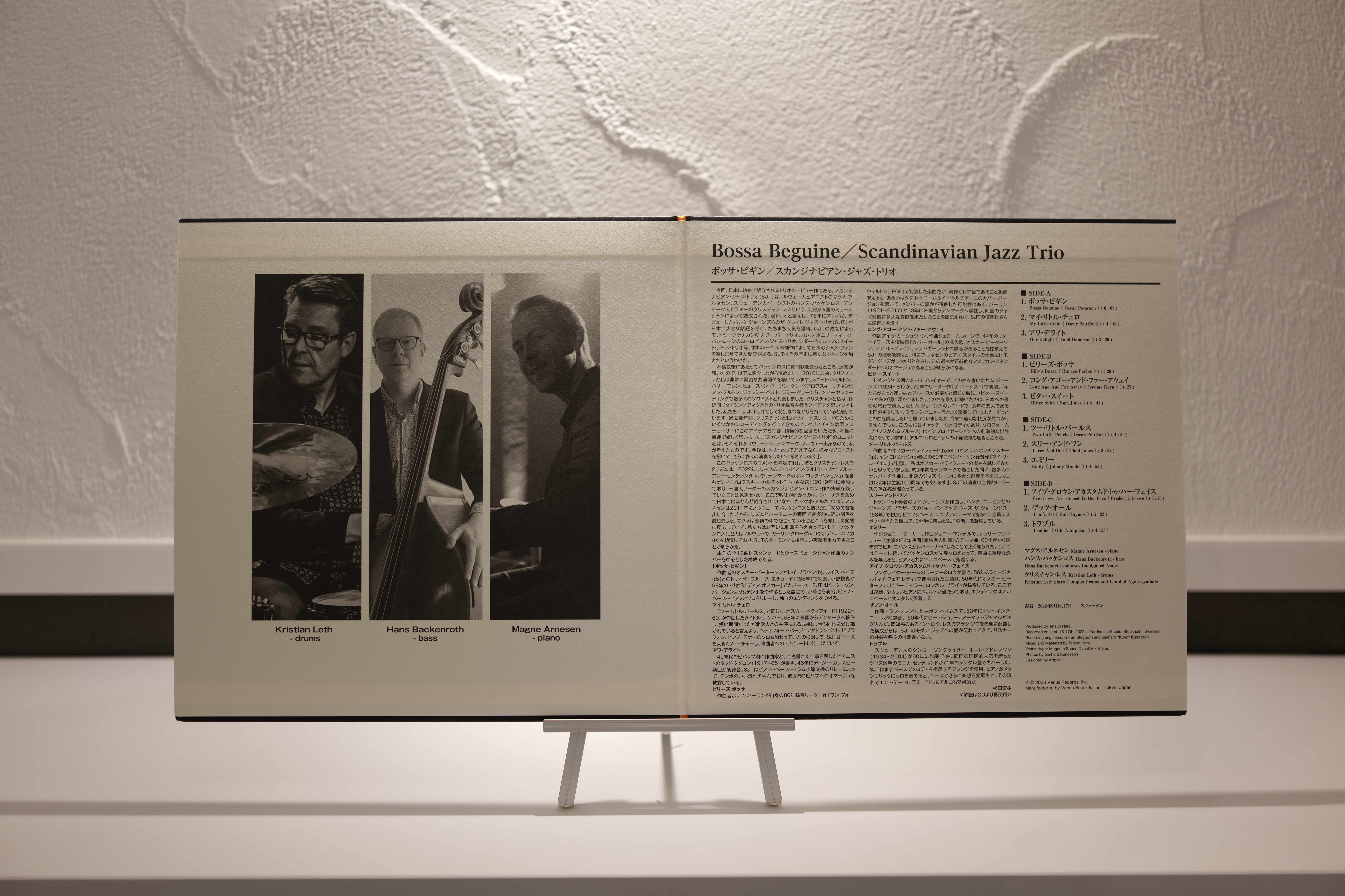
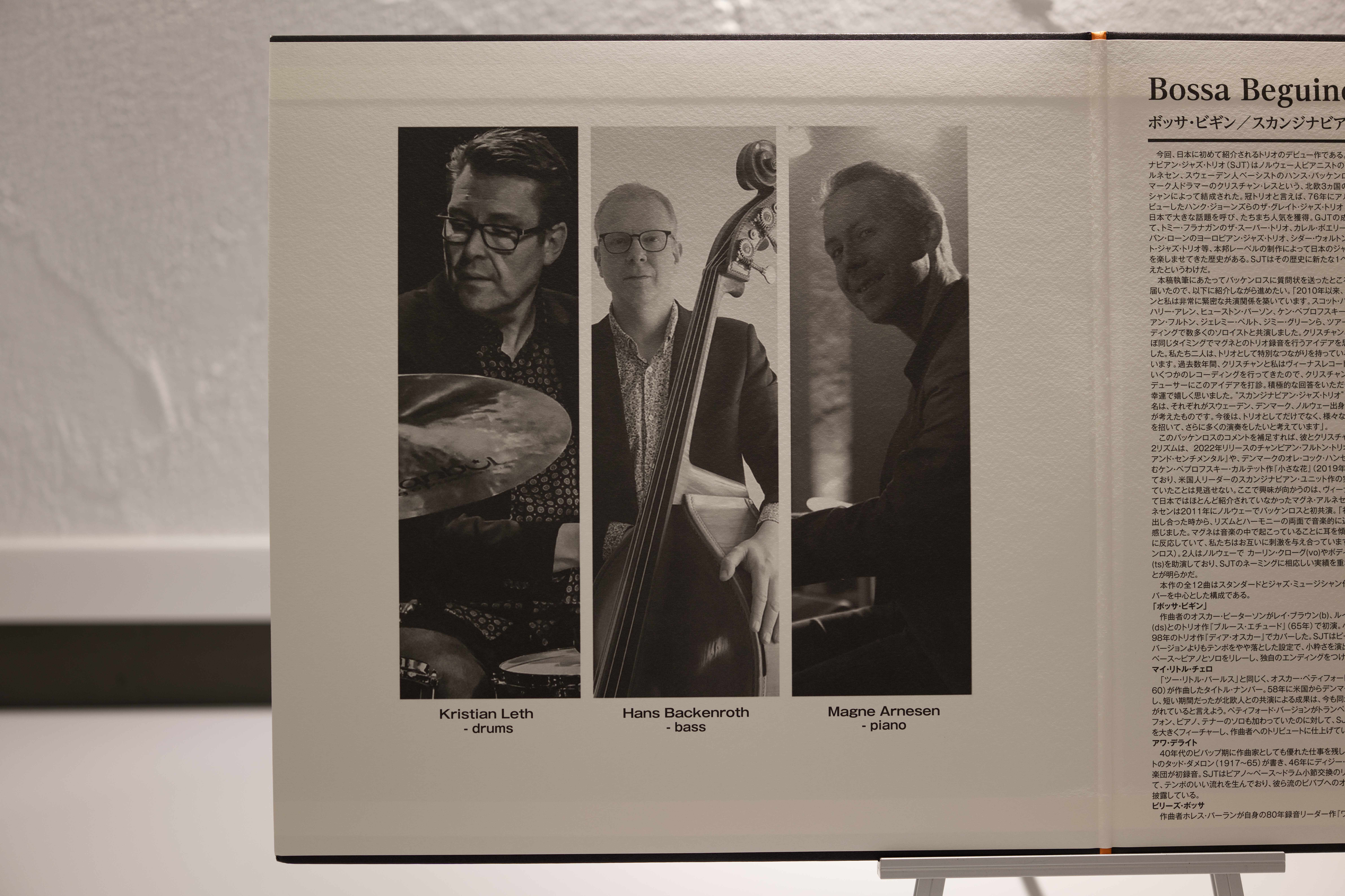
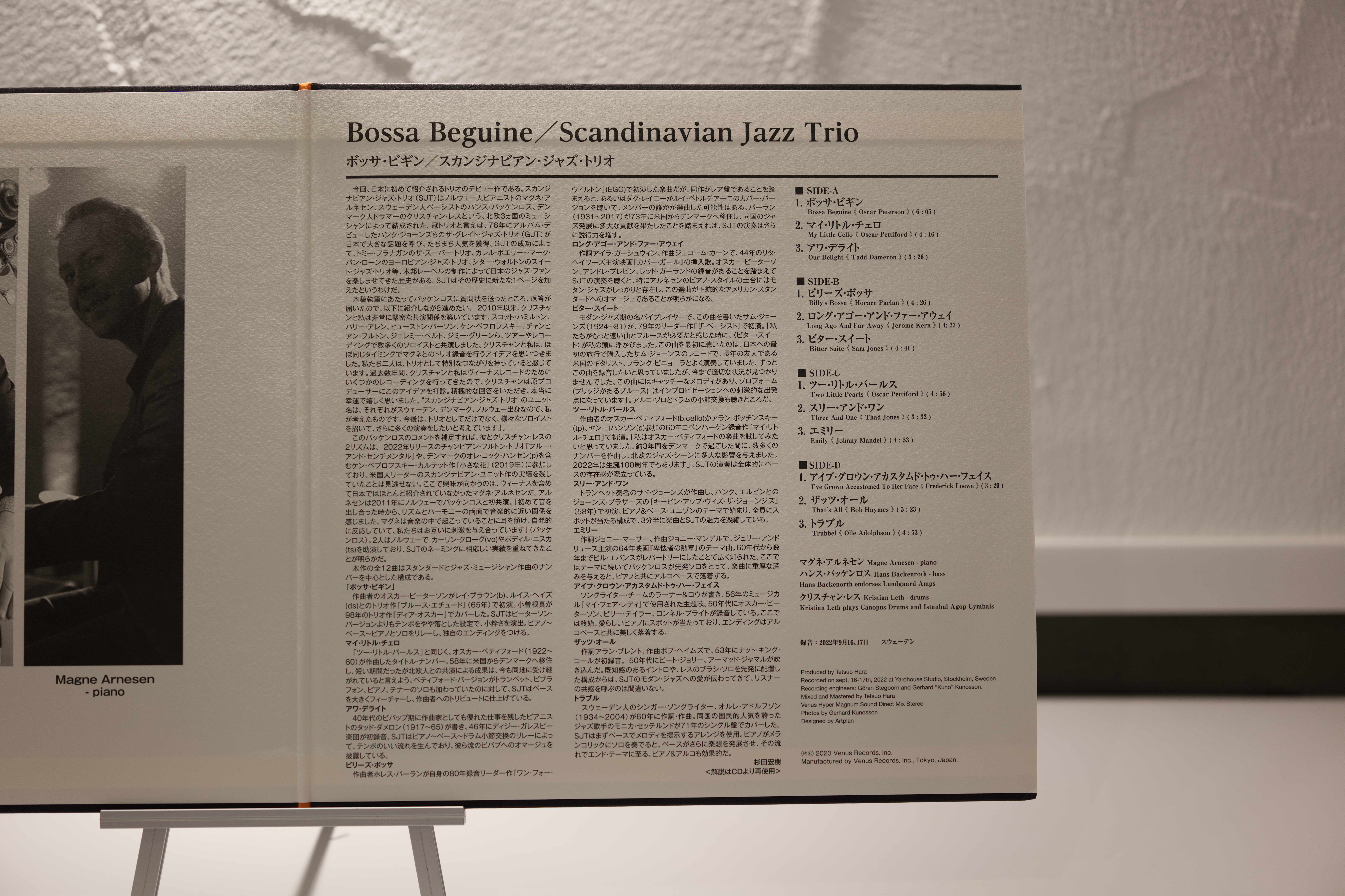
The cover deserves unqualified praise: firm, lightly textured paper bears the album name in white and the band name in terracotta lettering, and in the opened gatefold three portraits of the musicians look out at the viewer, while the right-hand side provides information on the recording in Japanese script, with only the titles and credits additionally rendered into English. On the back, track list and personnel appear in all sobriety.
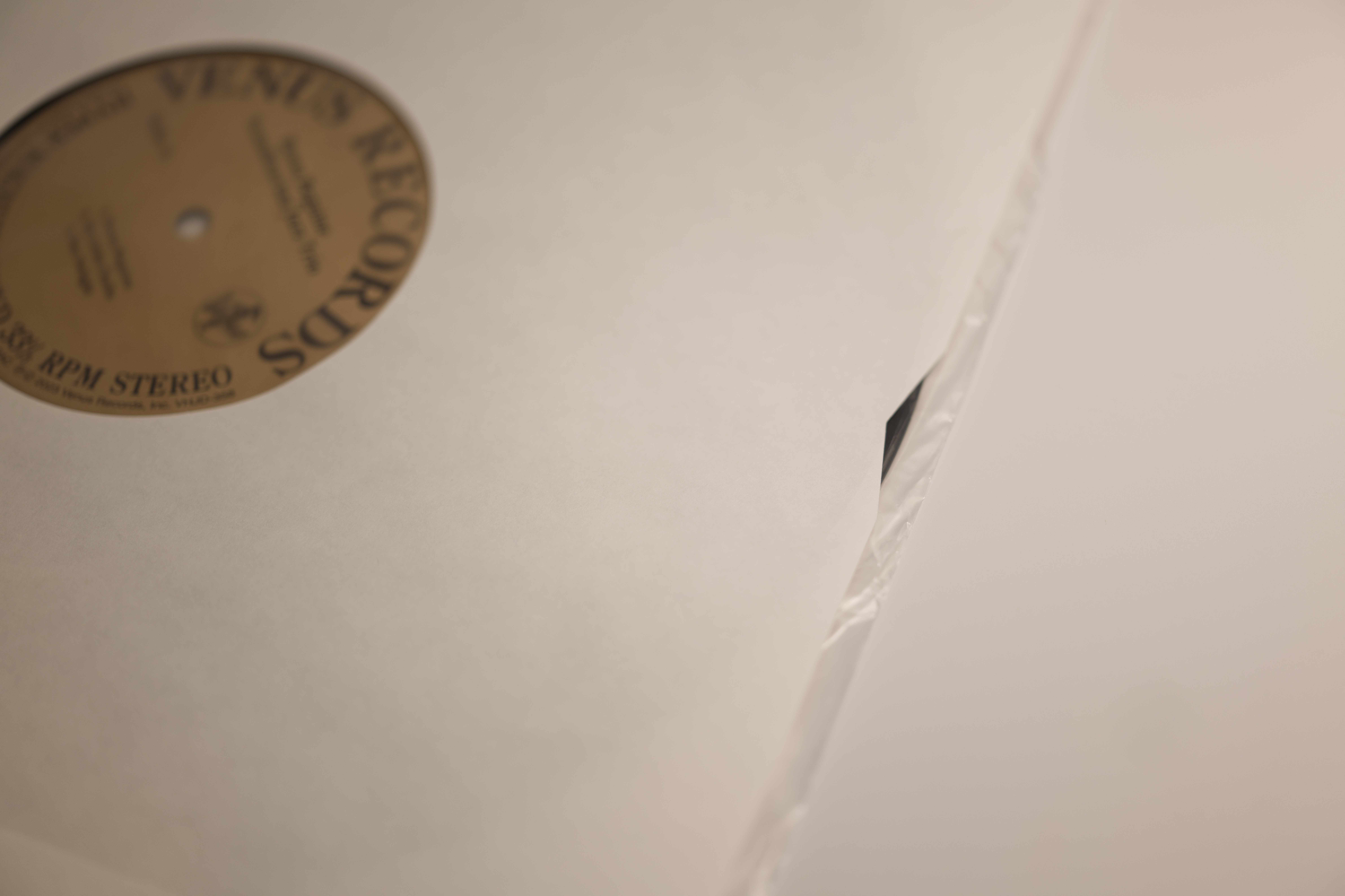
Whoever takes the record out of its sleeve finds it in a lined inner sleeve, in which the plastic foil sits as an insert inside a paper envelope with thumb cut-out, a solution that serves its purpose without a printed inner sleeve, which would have given the collector more pleasure, being available. Booklet and printed inner sleeve are unfortunately entirely absent from this edition, and what remains of pictorial material is limited to the three portraits in the open gatefold, a sparseness that does not do justice to the otherwise so elaborately designed cover. The obi strip, that narrow band of Japanese provenance, rounds off the presentation as a pretty gesture without closing the gaps left by the other extras.
MATERIAL QUALITY
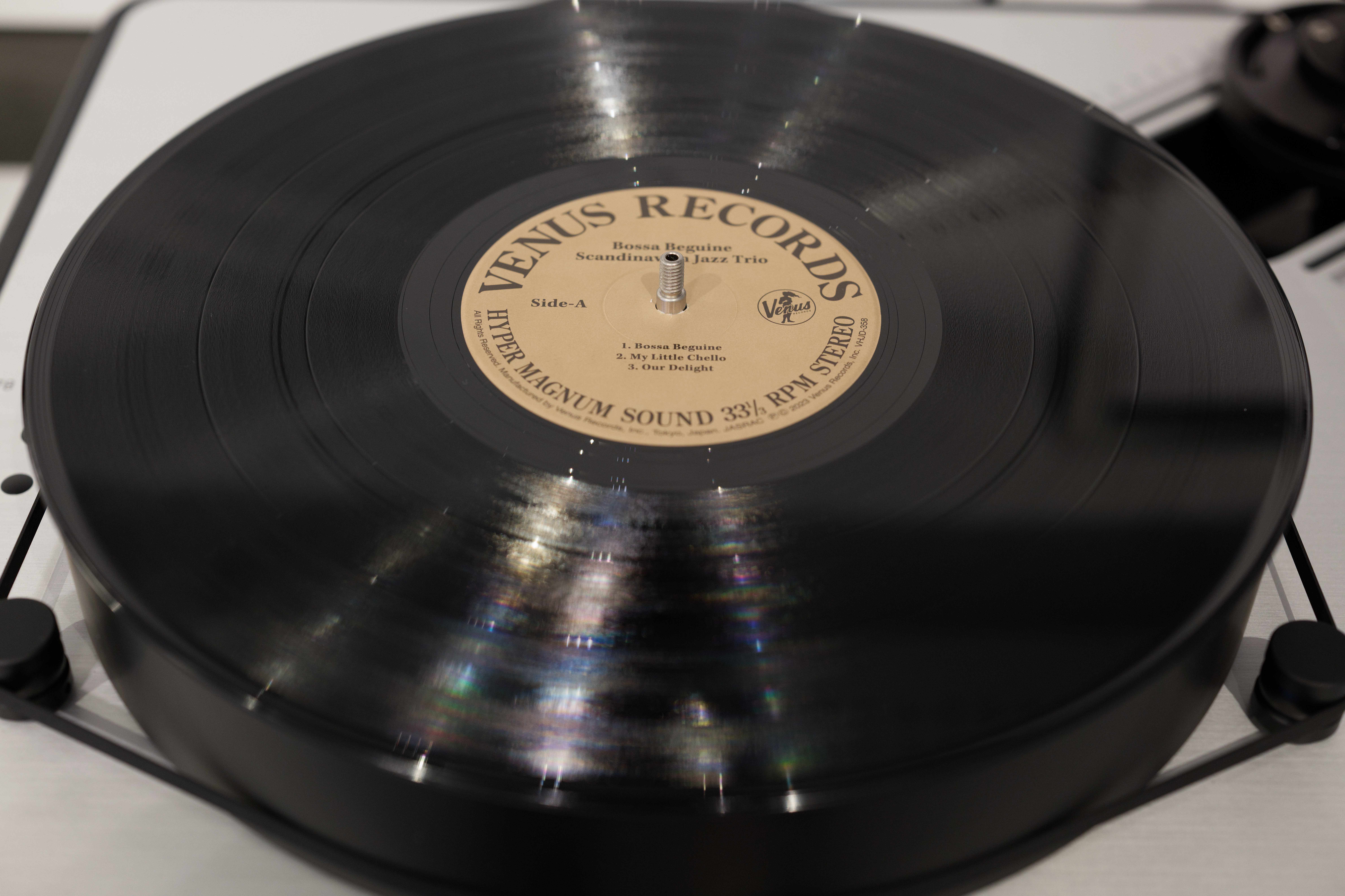
The material itself proves solidly pressed and immaculately clean: one searches in vain for surface noise, and the centre hole too sits exactly in its intended size and centring, so that the tonearm finds no cause for complaint. A slight dishing in the vinyl remains the only reservation regarding flatness, noticeable when placing the record on the platter, without making itself felt in the sound picture. The finding is more pronounced at the edges of the record, which feel rough and noticeably sharp-edged, a detail that strikes the connoisseur on picking up the record and that need not have been the case in a pressing of this ambition.
SOUND QUALITY
This pressing was heard on the DEUTSCH Acoustics Schallwand loudspeakers from our own house, with the analogue chain around Dr. Feickert Analogue and Dynavector in the VINYL-CHECK listening room. Each of the twelve pieces, from the title track via “My Little Cello” to “Trubbel”, shares the same approach: the rhythms remain accessible and carry the listener effortlessly through the whole side, a finding that occurs equally across the whole album and is not reserved for any single number.
Resolution succeeds most convincingly: no masking swallows a detail, the piano remains transparent in every keystroke, and the fine detail of the cymbals can be followed down to their last vibrations. The bass follows with good control and decent extension, dry enough not to lose itself in width, and the midrange carries the piano, which in the absence of vocals forms the trio’s central voice, in a tonal colour that presents itself pleasantly dark and never hard. The treble, too, convinces: the overtones of drums and cymbals are drawn in detail without tipping into the nervousness that clings to many recordings of this category.
Two reservations remain unaffected by this. The dynamics seem more subdued than the music would warrant; with less compression they would have gained more air for the phrases to breathe. And the tonality leans towards a bass-heaviness that takes a touch of lightness from the piano.
The stage itself gives rise to the sharpest criticism. In the middle stands the bass, holding its position with calm reliability. The drums strike from half left to half right, but concentrate mainly on the centre and thereby press noticeably up against the bass. The grand piano, finally, stretches across the entire width, the high notes at left, the low at right, a division that looks bold but takes from the three instruments the distance they would have been due: the piano could have extended from left to centre, as this line-up would have invited, the drums from centre to right, and the bass in the middle between them, so that each instrument would have kept its own place. As it is, the sound sources lie on top of one another where they could have spread out, and this one decision by the recording team remains the reason why an otherwise agreeable sound, equally mature in bass, midrange and treble, misses top class.
MUSICAL CONTEXT
With this choice of works the trio moves in the core repertoire of the swing tradition when it takes on Oscar Peterson, Thad Jones and Tadd Dameron, and opens itself occasionally, in keeping with the title, to Brazilian rhythm, without leaving the orthodox basic stance of the classic piano trio. For a debut it is striking how cohesively the three musicians already act, which owes more to the experience of each individual than to a long shared history. This recording fits effortlessly into the portfolio of Venus Records, which has always felt committed to the sound of the early sixties.
ASSESSMENT
The packaging splits into a strong and a weak camp: the cover meets every demand one may make of such a pressing, while inner sleeve, booklet and photographic material fall short of this care and leave the collector little to linger over. The material, by contrast, convinces almost throughout; cleanliness, centre hole and surface noise deserve top marks without exception, the slight dishing remains a marginal finding, and only the rough, sharp-edged rims cloud the otherwise flawless picture.
In the sound lies the real weight of this review, and there a trio shows itself that convinces in craft and in music without reaching the highest mark in every category. Resolution, bass, midrange and treble carry the album with sovereignty, while dynamics and tonality demand smaller, clearly nameable deductions. The stage weighs heaviest, whose division takes from the three musicians the distance their music deserved and which separates this pressing from the reference class that its label otherwise promises.
CONCLUSION AND PURCHASE RECOMMENDATION
Whoever is enthusiastic about the swinging, lucidly laid-out piano-trio jazz of these three musicians and can listen past a stage layout that shows more courage than measure will find in this pressing a technically solid, sonically mature album, whose packaging, admittedly, turns out slimmer than the price would suggest. Whoever, by contrast, expects textbook localisation of every sound source should know that the grand piano here takes the stage that really belonged to the whole trio, and may therefore reach for another reissue from the same house. I myself am keeping the record on the shelf, even if on the next listening session I shall again try to place the bass where the recording long since put it.