

Tsuyoshi Yamamoto Trio – Blues for K

FOUR SIDES FOR A SINGLE NAME
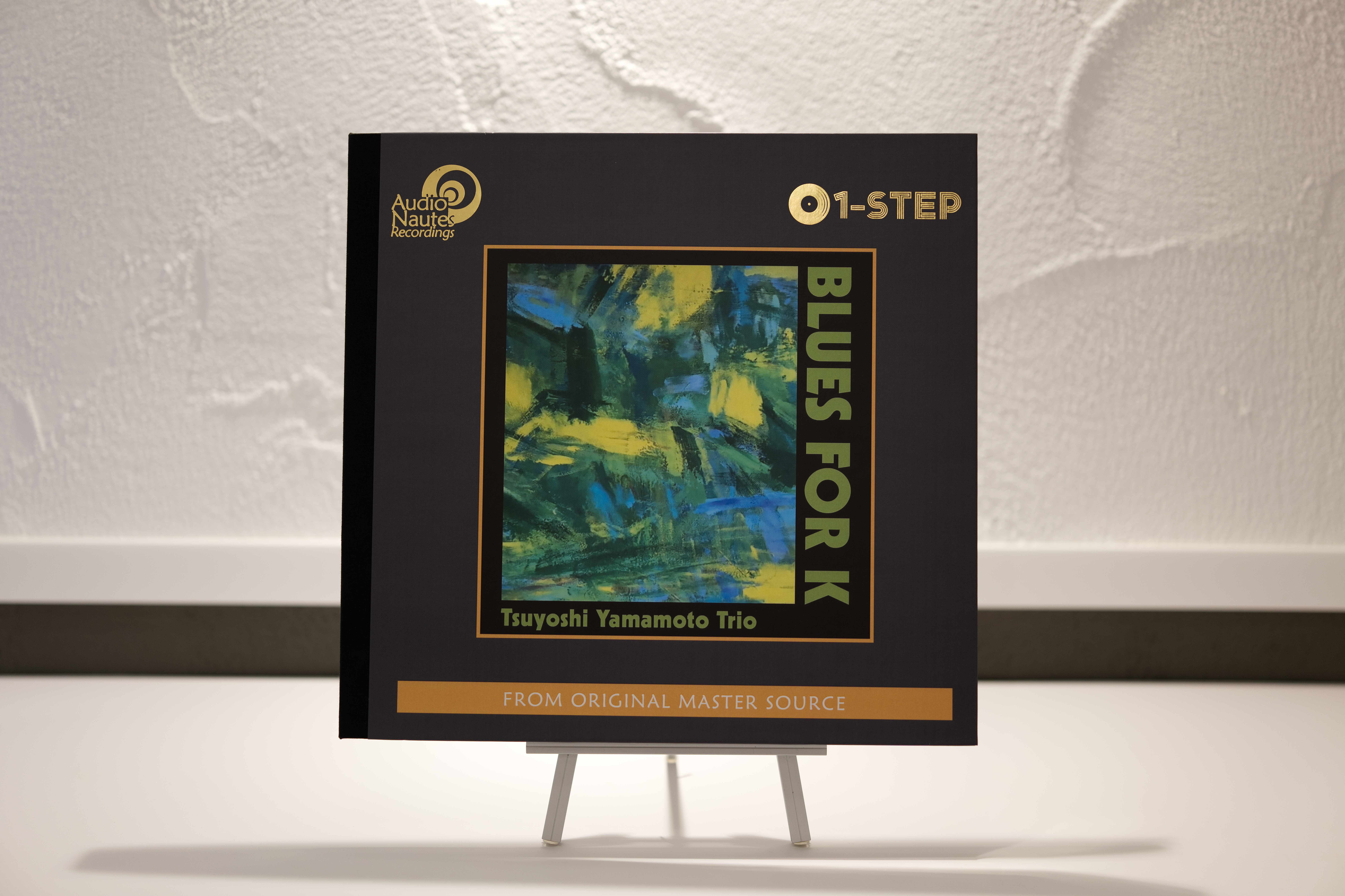
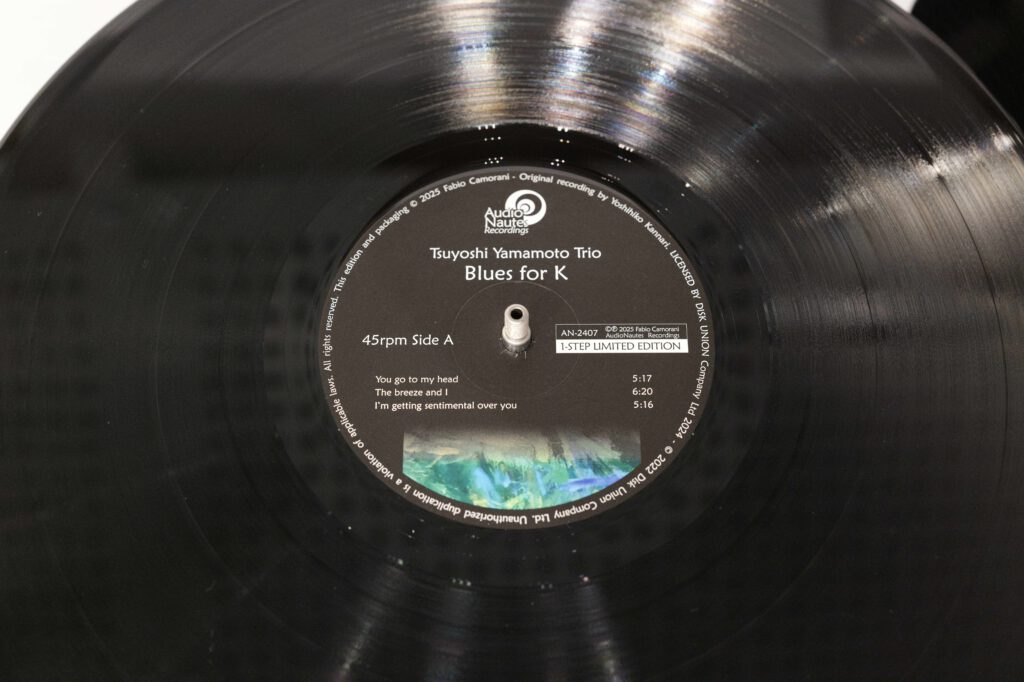
Four sides of vinyl at forty-five revolutions per minute carry, on this reissue, nothing but a single letter: the K in the title, to which the Italian label AudioNautes Recordings, under catalogue number AN-2407, devotes a gold-embossed, book-like hardcover, as though a name had to be justified that hardly any buyer deciphers at first glance. Whoever suspects behind this K merely a pretty marketing idea has reckoned without Yoshihiko Kannari, the recording engineer to whom Tsuyoshi Yamamoto once again entrusted his trio in June 2022 and who, over decades, helped shape the sound of the Japanese label Three Blind Mice. Whether a pressing that invests so much effort in a single letter also lives up to this claim in the run of its grooves is decided only where stylus and vinyl meet.
TECHNICAL DATA
– Artist / Album: Tsuyoshi Yamamoto Trio – Blues for K
– Label: AudioNautes Recordings (original release: Somethin’ Cool, Japan)
– Catalogue number: AN-2407
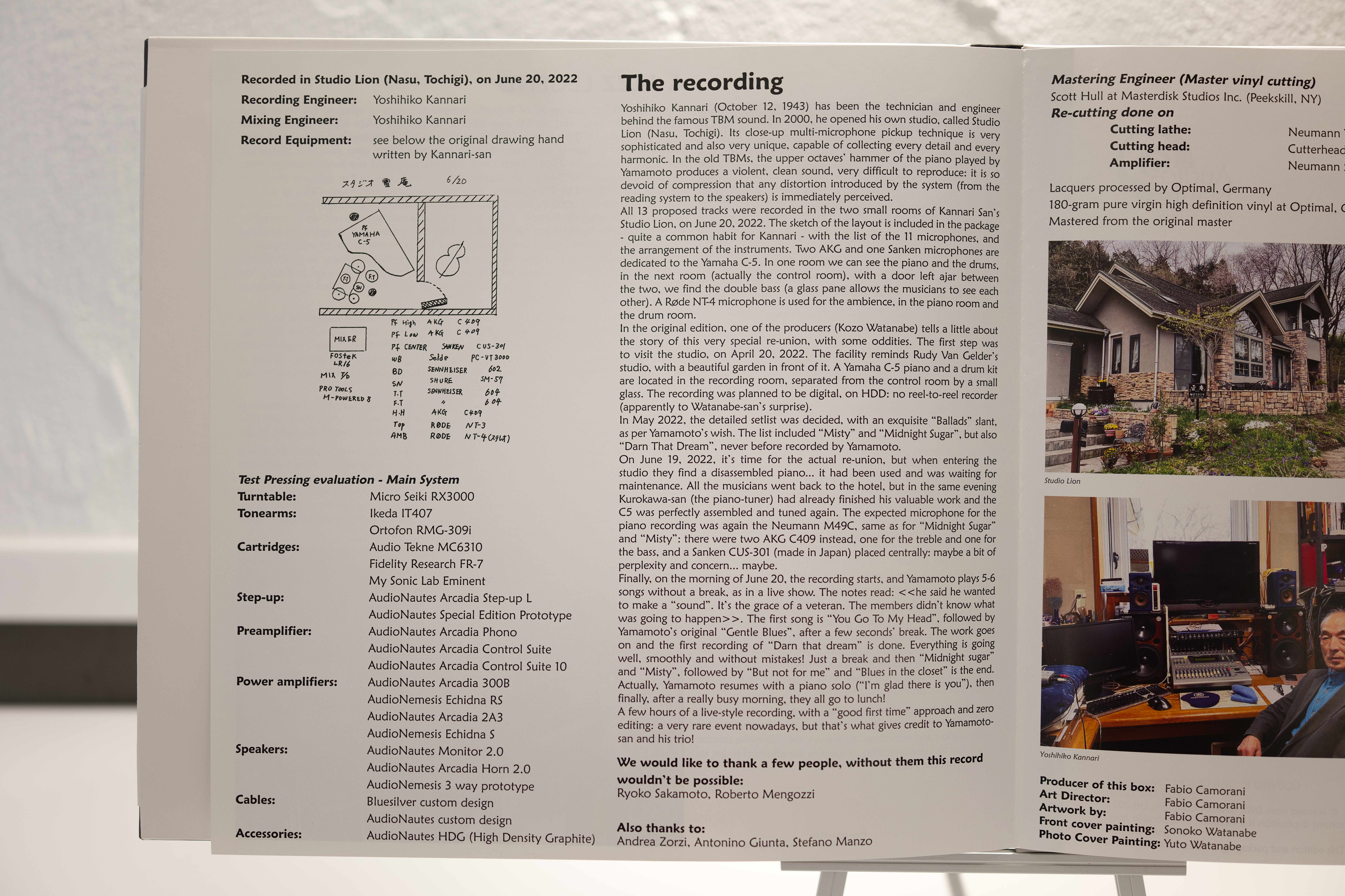
– Recording: 20 June 2022, Studio Lion, Nasu, Tochigi
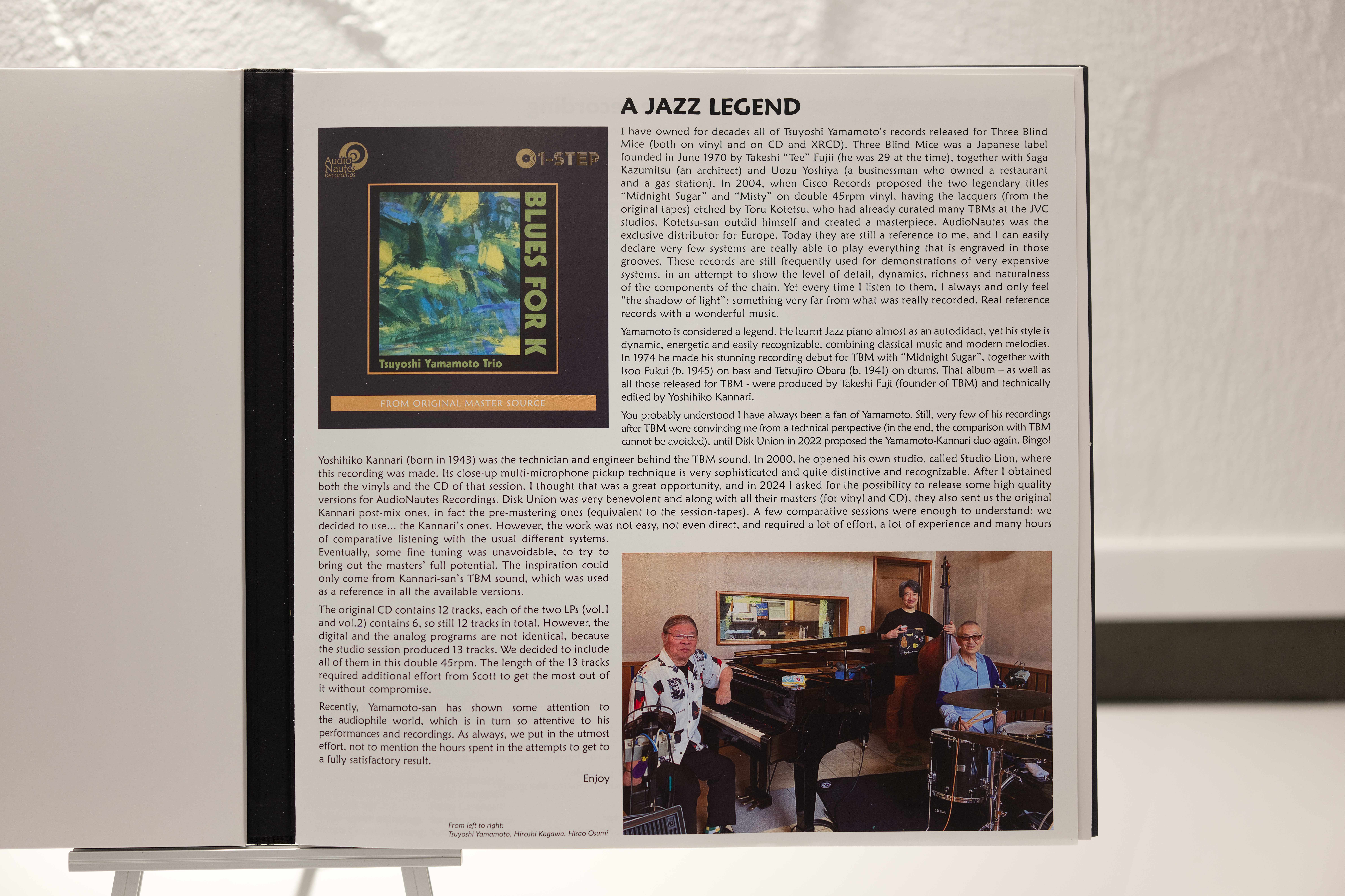
– Personnel: Tsuyoshi Yamamoto (piano), Hiroshi Kagawa (bass), Hisao Osumi (drums)
– Year of original release: 2022
– Year of release of this pressing: 2025
– Pressing plant: Optimal Media, Germany
– Producer: Fabio Camorani
– Mixing: Yoshihiko Kannari
– Mastering: Scott Hull, Masterdisk (also lacquer cutting)
– Vinyl weight: 180 g
– Format: Double LP, 45 rpm, one-step process, stereo, limited and numbered, hardcover book with slipcase
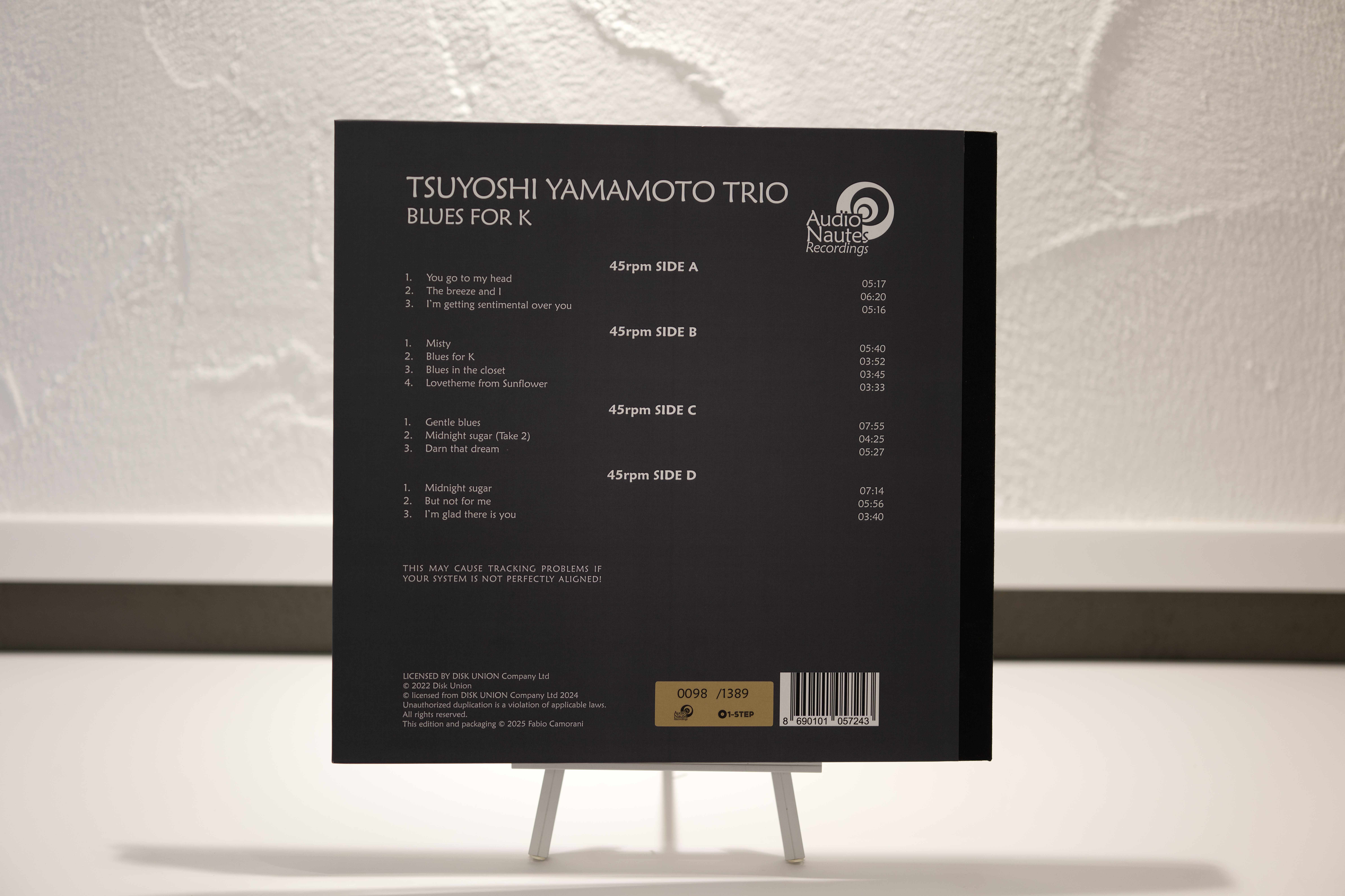
– Edition: 1,389 copies, my copy bears the number 0098
– RRP: not known
ARTIST AND ALBUM IN HISTORICAL CONTEXT
Tsuyoshi Yamamoto was born on 23 March 1948 on the island of Sado in Niigata Prefecture and taught himself the piano largely on his own, before a French film soundtrack of all things led him to jazz: the music of Art Blakey and the Jazz Messengers for “Les Liaisons Dangereuses” from 1959 decided early where his path would go. He studied at Nihon University, from 1967 accompanied the singer and actor Micky Curtis on a European tour, and in 1974 became house pianist of the Tokyo jazz club “Misty”. In the same year he recorded his debut album “Midnight Sugar” for the label Three Blind Mice, together with the bassist Isao Fukui and the drummer Tetsujiro Obara, and the trade magazine Swing Journal honoured the production in its year of release both as best recording and with the Jazz Disc Award.
Three Blind Mice, founded in 1970 by Takeshi “Tee” Fujii with the aim of becoming Japan’s answer to Blue Note, relied on a fixed team of Fujii, the recording engineer Yoshihiko Kannari and the art director Ben Nishizawa, and Yamamoto advanced, alongside the bassist Isao Suzuki, to the label’s second great name. When in 1974 Yamamoto dedicated his album “Blues For Tee” to the late Fujii, he laid the foundation for a gesture he repeated in 2022: “Blues for K” is for Kannari, with whom Yamamoto recorded in the seventies a large part of those recordings that define the TBM sound to this day. For the reunion session, recorded on 20 June 2022 in Kannari’s own Studio Lion in Nasu, Tochigi Prefecture, both returned after decades to the same control room, this time with the bassist Hiroshi Kagawa and the drummer Hisao Osumi at their side. The album originally appeared in 2022 on the Japanese label Somethin’ Cool, on CD as well as on two separate LPs.

THIS EDITION
For this version the Italian label AudioNautes Recordings, run by Fabio Camorani, took up both original LPs in a single package and had them cut as a double LP in the one-step process at 45 revolutions per minute, pressed at Optimal in Germany. AudioNautes, which in recent years has made a name for itself with carefully documented reissues of recordings such as “Jazz at the Pawnshop” or Arne Domnérus’ “Antiphone Blues”, by its own account works in principle from the original tapes and avoids intermediate stages that have been mixed down beforehand. The edition carries a consecutive number on the cover; the exact number of copies for this edition is 1,389. Anyone wishing to acquire the set must, depending on dealer and country, reckon with a price of around 120 euros upwards.
PACKAGING
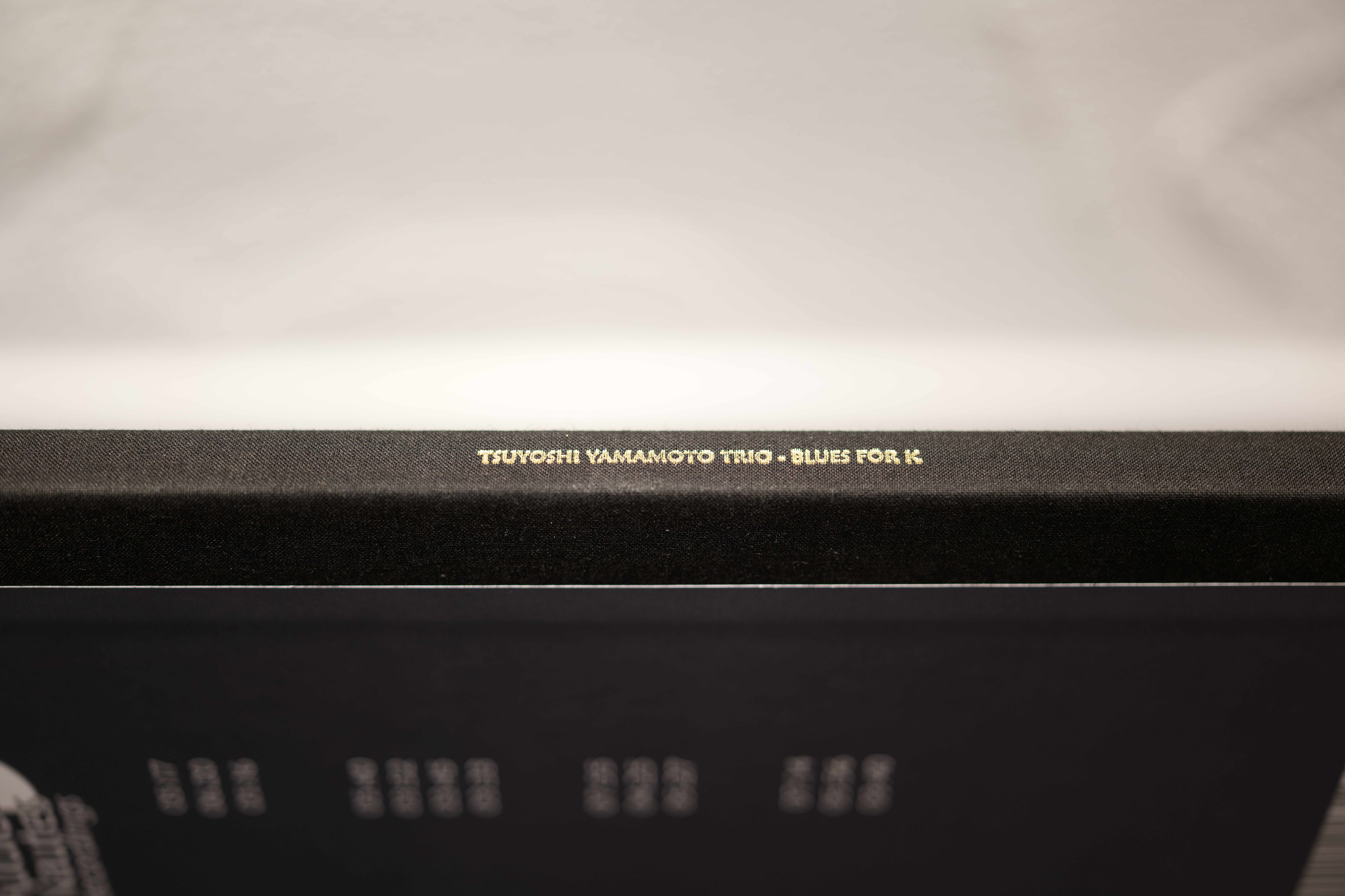
Whoever takes this album in hand for the first time holds at first no cover but a book: matt, gold-embossed board encloses both records as book covers enclose their pages, and whoever opens it finds at the beginning and the end a slipcase of its own in which the discs rest, while lined inner sleeves protect them from any contact with rough board. The booklet is firmly bound into this book and has become its own pages, densely printed with details on the band, on the recording situation in Kannari’s Studio Lion and on pretty much every piece of equipment that was used on that June day in 2022, from the microphones via the mixing desk to the cutting lathe. To these are added photographs of band, studio and instruments, which give the printed page a face that many reissues fail to give their buyers. A printed inner sleeve, however, does not come with this edition, and in view of the remaining outlay this single omission hardly weighs.
MATERIAL QUALITY
On the platter the record lies largely flat, with a minimal vertical runout that shows only on close inspection and puts nothing in the way of the sound later. A wash before the first play is not strictly necessary given this cleanliness, but remains advisable all the same, for whoever cleans their vinyl as a matter of principle before the stylus first touches down gains, with this pressing, the last reserve of silence as well. The edges themselves could be more rounded, though without being unpleasantly noticeable when placing the record, and the centre hole too is dimensioned a touch too large and a tiny bit off the exact centre, which the tonearm compensates with a barely perceptible corrective motion that no ear registers. Surface noise occurs only very sporadically, a single click and, on side D, a faint groove noise in the lead-in groove that fades before the music even begins. All in all, AudioNautes thus achieves a solid if not flawless piece of pressing craftsmanship, whose small deviations at no point take anything from the music.

SOUND QUALITY
What holds this album together at its core is a precision that never tips into coldness. From the first keystroke I hear how cleanly the pressing resolves every detail, without a piano note mingling with the ringing cymbal or a plucked bass string losing itself in the surrounding space. This clarity allows the dynamics to unfold across their full bandwidth: the touch of the grand piano ranges from a breath to the full weight of the hand, the bass alternates between plucked emphasis and bowed softness, and the drums let every cymbal ring out long enough that one can watch the tone vanish. Even the brush stroking across the head of the snare remains audible as a single, fine movement, and where an accent is set, it arrives abruptly, never announced. That this picture holds throughout the entire programme weighs particularly heavily, for between quiet ballads such as “Misty” and bluesier numbers such as the title piece or “Blues in the Closet” lies a considerable dynamic distance: where the ballads linger in pianissimo, the drums gain contour in the more driving themes, without the bass losing ground or the grand piano forfeiting its definition.
For me, resolution and dynamics go hand in hand with this pressing. Every quietest pianissimo of the grand piano remains tangible without sinking into the record’s noise floor, and when Yamamoto in calmer passages withdraws his playing almost to silence, every single struck key still remains audible as a clearly contoured impulse of its own. A rubato that the pianist allows himself here and there stretches time without bass and drums ever losing the thread, and to make this small freedom audible without blurring it is among the more difficult tasks a pressing has to solve. Even in the quietest decay of a phrase, separation is maintained: one hears where one note ends and the next begins, even when the two are divided only by a breath, and this ability not to smear the finest transitions distinguishes a very good pressing from one content with good sound.
Spatially the trio arranges itself before me with an exactness that can be described like a stage across which the gaze travels. In the middle stands the bass, firmly rooted, carrying the foundation without pushing itself forward. The grand piano turns toward the listener and spreads across the left half of the stage, the high registers far out at left, the low registers over to the centre. To the right of that the drums occupy the space from the centre almost to the right edge, likewise turned toward the listener. The hi-hat marks the outermost right-hand point. The snare lies a shade in front of it, at half right. The floor tom occupies the centre of the kit. And the ride cymbal announces itself from the left half of the stage, positioned close to the grand piano. Around this arrangement a space of striking dryness arises, no reverberation veils the contours, and it is precisely there that the realism lies which makes a stage presentation credible in the first place. Even whoever shifts their head only a few centimetres between the loudspeakers hears the individual positions re-sort themselves without any of them losing solidity, and this stability of imaging is no matter of course with a double LP that sees the stylus lifted and set down again several times over four sides.
Tonally the entire bandwidth remains balanced, no register outshines another, and precisely in the passages in which all three musicians phrase simultaneously, the pressing preserves an overview that is otherwise easily lost when piano, bass and drums contend for the same frequency space. Here it shows what makes a piano trio an ensemble in the first place: every voice remains audible in its own right, each keeps its place without one displacing the other, and it is precisely this balance that ultimately carries the overall impression holding the whole chapter together. What sounds so effortless here betrays, in this very effortlessness, how much work really lies in it and how carefully this pressing has preserved it.
MUSICAL CONTEXT
Within Yamamoto’s oeuvre, “Blues for K” marks a mature return to his own beginnings: almost fifty years after “Midnight Sugar” the pianist meets the same sonic ideal once more, not as a debutant who has to prove himself, but as a musician who knows how much a single, clearly placed note can achieve. The repertoire of standards such as “Misty” or “But Not for Me” and original blues themes deliberately relies on the familiar, and it is precisely by this that one can measure how much nuance, timing and touch decide an interpretation when the melody itself no longer holds any surprise. That it is precisely Kannari, the recording engineer behind the entire TBM catalogue, who captures this session closes a circle that has accompanied Japanese jazz history since the seventies: the promise that a small trio in the right room, with the right miking, can create more sonic reality than any large production.
ASSESSMENT
Little critical can be said in the end about the packaging: cover, lined inner sleeve, booklet and photographs consistently reach the level that deserves unqualified praise, and the one omission in this packaging, the missing printed inner sleeve, weighs lightly by comparison. In material quality, by contrast, every single category falls narrowly but consistently short of top marks: flatness, cleanliness, edge rounding and the centring of the centre hole each show small, clearly nameable deviations, which taken alone hardly matter but in sum show that a very good, not a flawless, pressing has been created here. The sound quality, in turn, deserves a mark without any qualification across all six categories examined, and dynamics, resolution, imaging, spatiality, tonality and overall impression come together into a picture that does justice to this recording and its history in every respect. That the material quality does not quite reach this top mark while the sound achieves it effortlessly noticeably shifts the overall picture, for me, in favour of what is actually to be heard on this pressing.
CONCLUSION AND PURCHASE RECOMMENDATION
Whoever buys this set buys first a letter and only secondarily two records, yet after four sides listened through it is clear that the two belong together: a dedication that takes so much trouble deserves a sound that stands up to it, and this is precisely what AudioNautes delivers, with a consistency that absorbs even small deductions in the material with sovereignty. I can recommend this pressing to all who value an audiophile trio recording with calm timing and a stage image that can almost be felt out by touch, together with workmanship that lets one forget its price for the moment. Whoever, on the other hand, cares more about flawless vinyl than about a good story, I advise to factor in the small deviations in the material before deciding. Should AudioNautes one day put a “Blues for Reviewers” into its programme, the writer of these lines has already reserved a letter.