
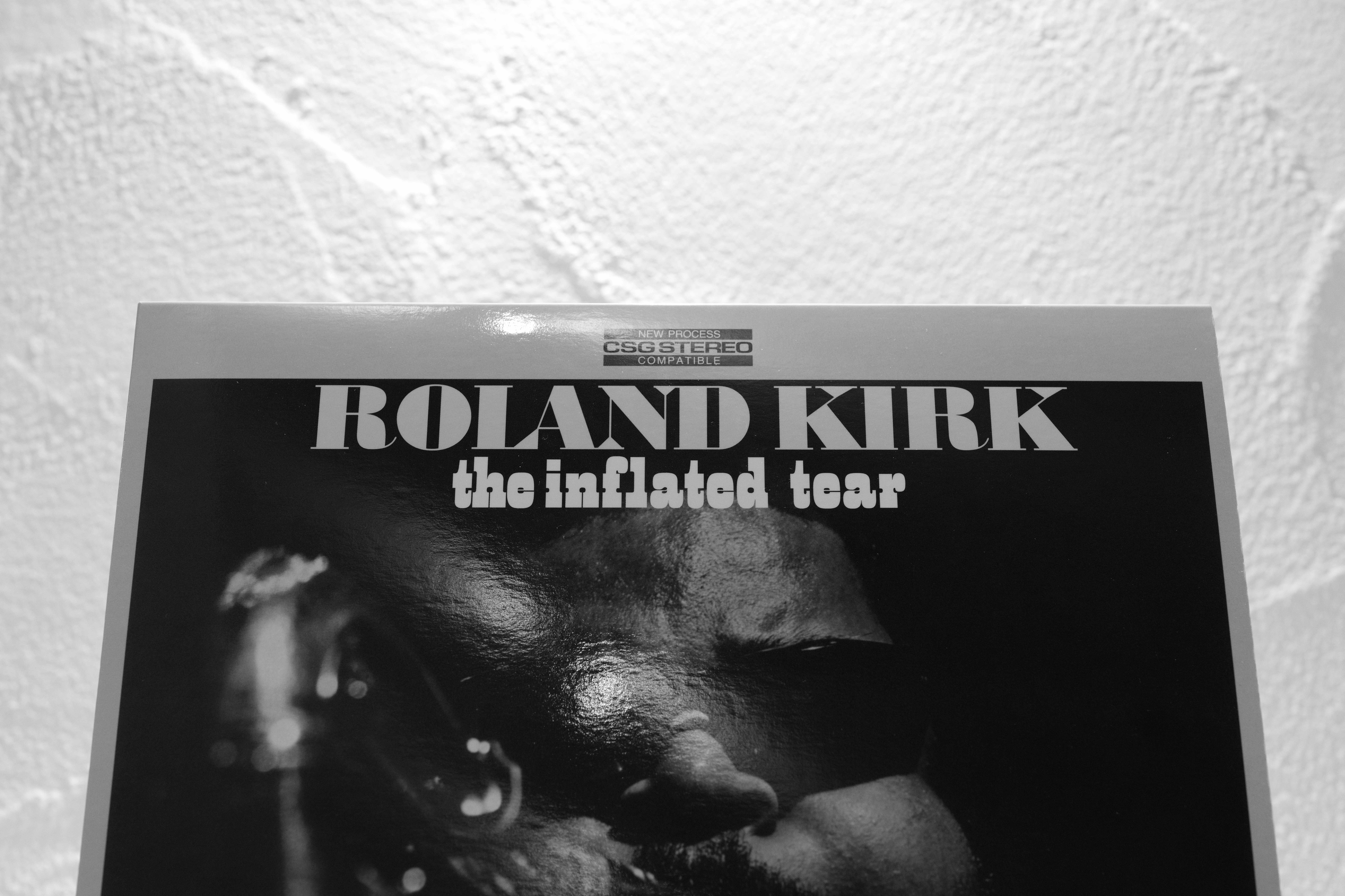
Roland Kirk – The Inflated Tear

KIRK’S HORN AT THE CENTRE, THE ROOM ON A SINGLE POINT
An instrumental album that takes from a whole genre its loudest voice and yet moves us must put something else in its place. What steps into the place of singing when a saxophonist means to sustain a narrative across nine pieces without a single word, and is a blind musician from Columbus, who bent several saxophones into shape himself so that he could play them simultaneously, equal to it? How far can restraint be pushed before a musician celebrated as wild and virtuosic becomes a quiet storyteller, and does the album recorded in New York in the autumn of 1967, whose title tells of a tear that does not fall, live up to that claim?
Anyone who had seen Roland Kirk on stage in the preceding years knew him as a man with three self-modified horns around his neck and as someone who kept a single note alive for minutes without visibly drawing breath. His audience expected tempo and abundance, a performance that showed more instruments than one person can operate.
This album carries nine titles, almost entirely from Kirk’s pen, plus a single piece from another hand, that of Duke Ellington, and each of them was meant to answer the question of renunciation in its own way.
TECHNICAL DATA
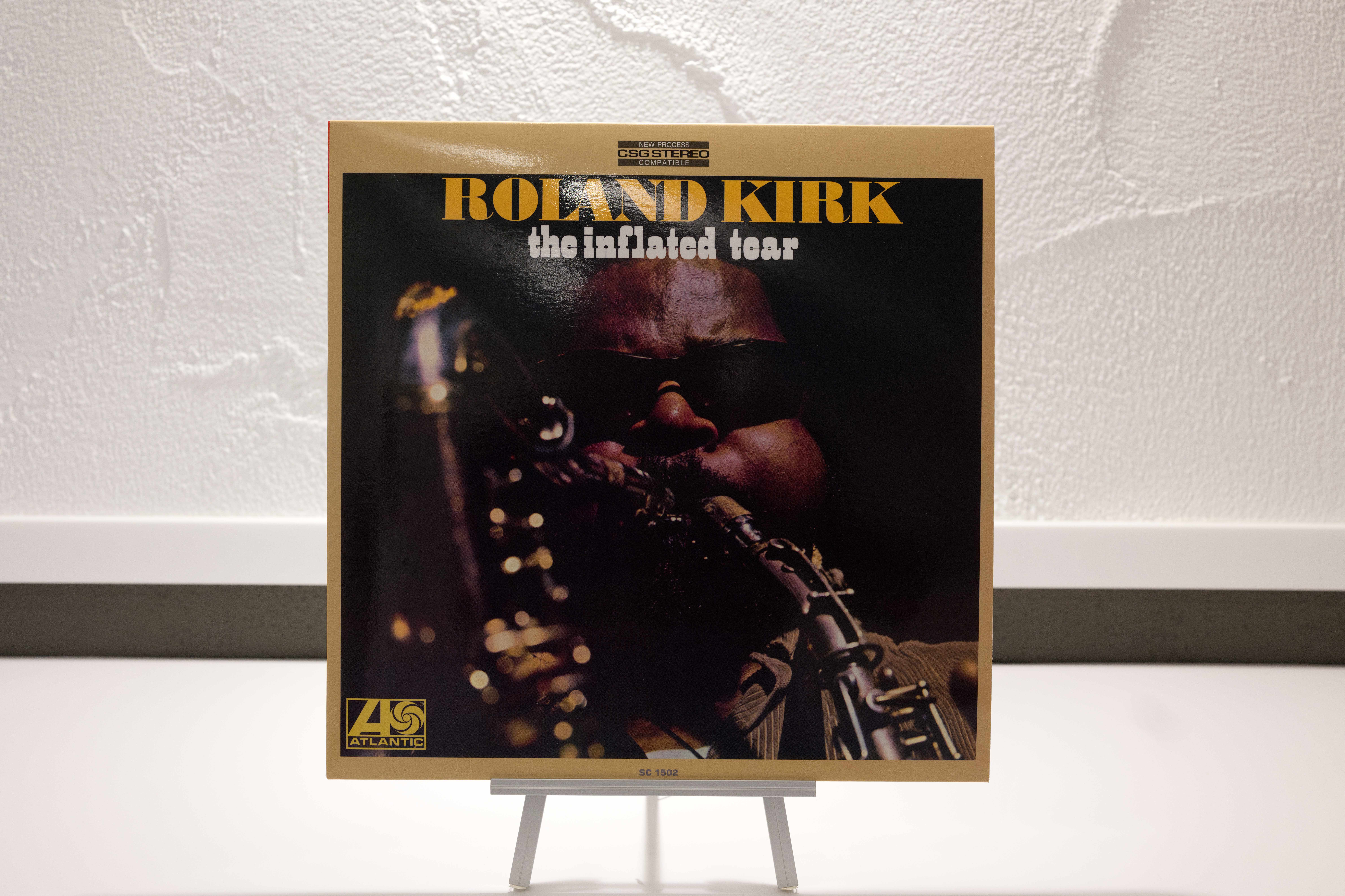
- Artist / Album: Roland Kirk – The Inflated Tear
- Label: Speakers Corner Records (original label: Atlantic)
- Catalogue number: SCR-1502 (original: Atlantic SD 1502)
- Recording: 27 and 30 November 1967, Webster Hall, New York City (recording supervision: Paul Goodman)
- Year of original release: 1968 (14 June 1968)
- Year of release of this pressing: 2026 (15 May 2026)
- Pressing plant: Not known
- Producer: Joel Dorn
- Mixing: Not known
- Mastering: Purely analogue, from the original master tape to the cutting head; mastering engineer not known
- Vinyl weight: 180 g
- Format: LP, 33⅓ rpm, standard sleeve (single sleeve)
- RRP: €35.00 (figure supplied by the distributor Sieveking Sound)
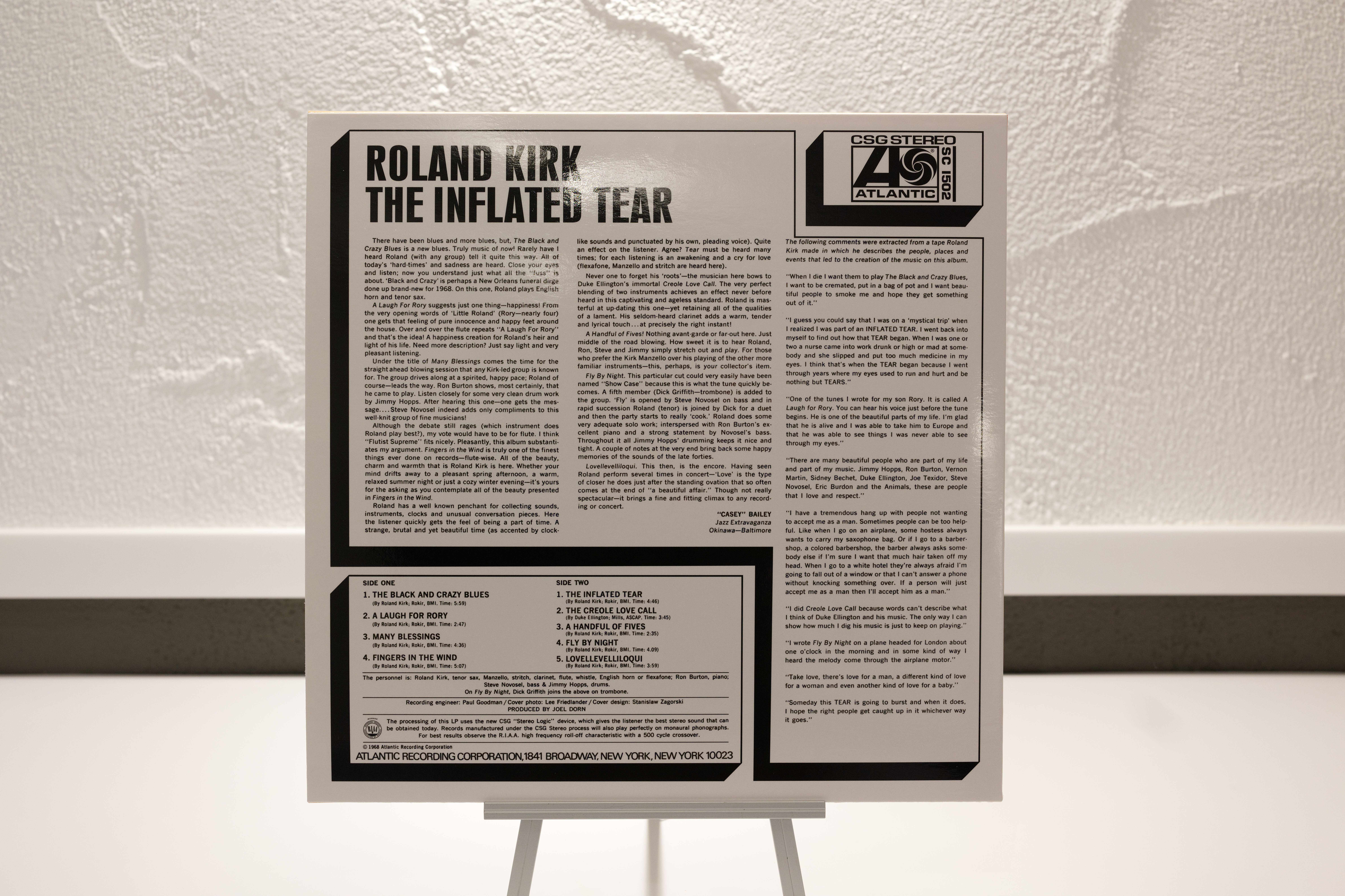
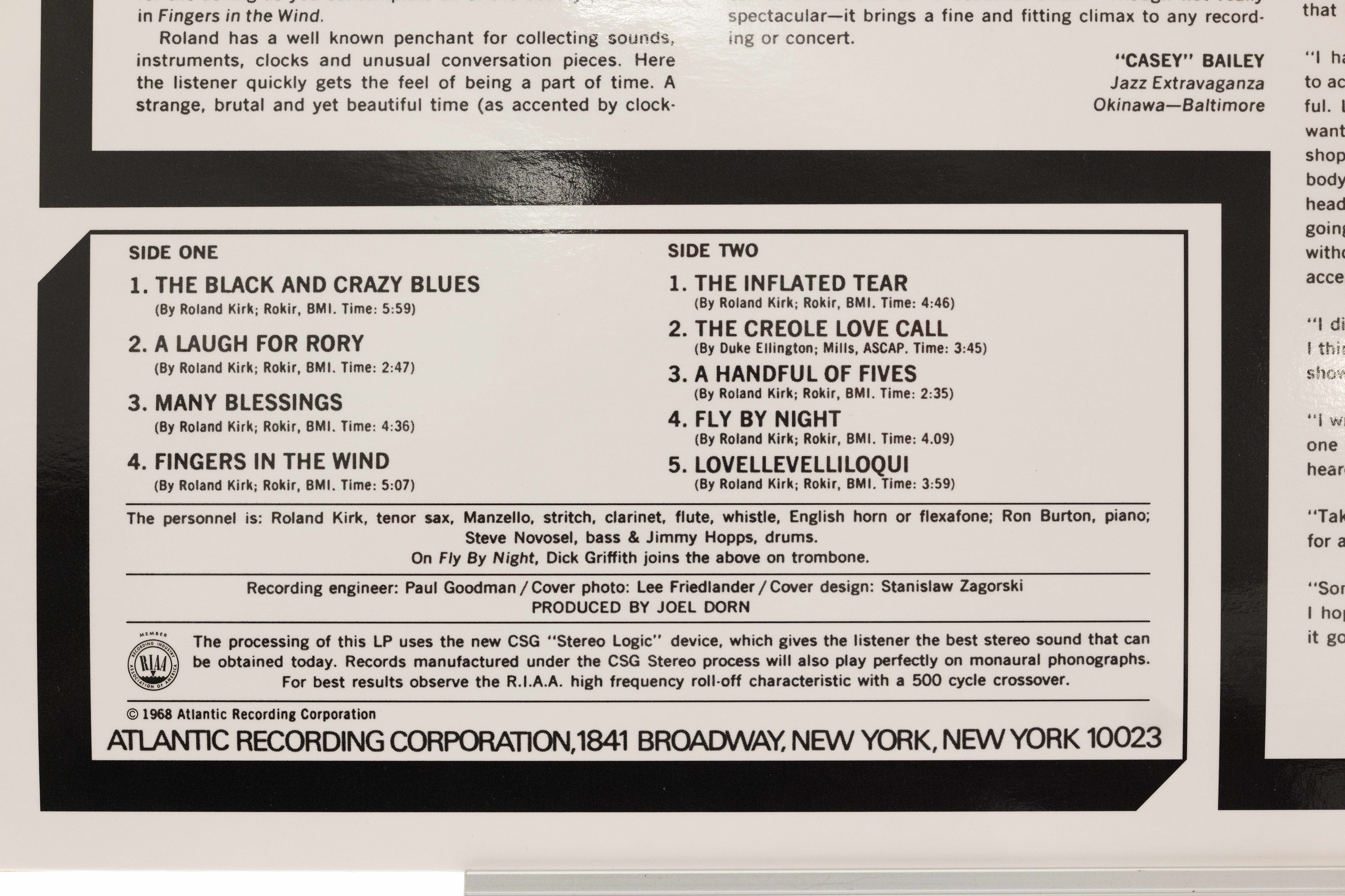
- Personnel: Roland Kirk (tenor saxophone, manzello, stritch, clarinet, flute, whistle, cor anglais, flexafone), Ron Burton (piano), Steve Novosel (bass), Jimmy Hopps (drums), Dick Griffith (trombone, on “Fly by Night” only)
- Side A: The Black and Crazy Blues, A Laugh for Rory, Many Blessings, Fingers in the Wind
- Side B: The Inflated Tear, The Creole Love Call, A Handful of Fives, Fly by Night, Lovellevelliloqui
ARTIST AND ALBUM IN HISTORICAL CONTEXT
Ronald Theodore Kirk was born in Columbus, Ohio, in 1935 and lost his sight in early childhood through improper medical treatment. At the Ohio State School for the Blind he learned the fundamentals of his craft as a teenager, and at fifteen he was standing professionally on the stages of rhythm and blues. He later swapped two letters of his first name to make Roland, and in 1970, born of a dream, the additional first name Rahsaan followed.
What set him apart from the rest of the jazz of his time was less his blindness than his handling of his own tools. Kirk rigged up tenor saxophone, the rare manzello and the equally rare stritch in such a way that he could hold all three in his mouth at once and play them, along with flute, clarinet, a cor anglais and instruments of his own invention. Circular breathing allowed him to hold a note for a length that took the audience’s breath away, while he himself never ran out. In 1960 he was drawn to New York, where he played alongside Charles Mingus, Quincy Jones and Roy Haynes, though he always preferred his own band to the role of sideman.
In the autumn of 1967 he entered a New York studio for Atlantic Records, this time without any intention of displaying his own abundance. Producer Joel Dorn, who over the following years became his most important companion in the studio, had him record, with pianist Ron Burton, bassist Steve Novosel, drummer Jimmy Hopps and trombonist Dick Griffin, an album that broke with his reputation as an entertainer.
THIS EDITION
On an ordinary morning the postman arrived with a surprise, a parcel that nobody had ordered, and what lay hidden inside was on the platter before noon. A review copy without prior arrangement, unwrapped with that joy which occasionally gives the profession its finest moments.
Almost sixty years after its first release, Speakers Corner Records, a label devoted exclusively to recordings from the analogue era since the early nineties, is bringing this album back to market. According to the label, the cutting is done purely analogue from the original tapes. It is pressed at that plant in Diepholz to which the industry has for decades ascribed the reputation of one of the most reliable in Europe, even though neither the pressing plant nor the mastering studio could be individually verified with final certainty for this one edition. Whoever puts this edition on the turntable hears, technically speaking, closer to the original tape material of that session than most digital versions allow.
PACKAGING
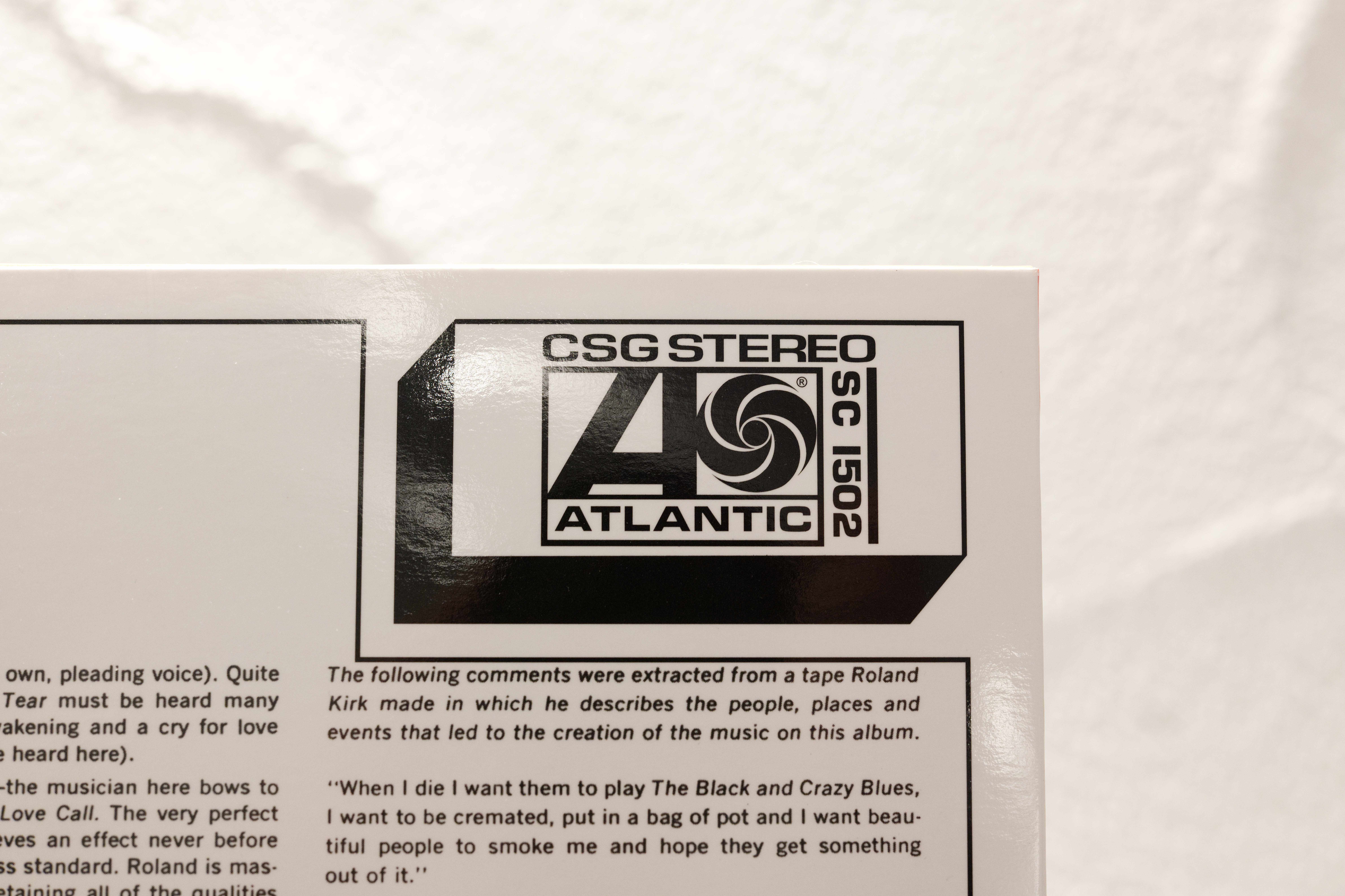
Whoever takes the album in hand for the first time holds a work that denies itself any outlay beyond the music itself, and precisely therein lies its first small concession to criticism. The cover presents itself simply, without gatefold, in a glossy finish, cleanly made, yet without the additional touch that turns a cover into an object in its own right. Draw the record from the sleeve and it is received by a lined inner sleeve that feels pleasant to the touch and reliably fulfils its sole purpose of protecting the vinyl from scratches. A printed inner sleeve, a booklet, photographs from the session or other accompanying material do not come with this edition, which takes nothing of its music from the path from sleeve to stylus, but does withhold that gesture with which a label shows its care even where the stylus cannot hear it.
MATERIAL QUALITY
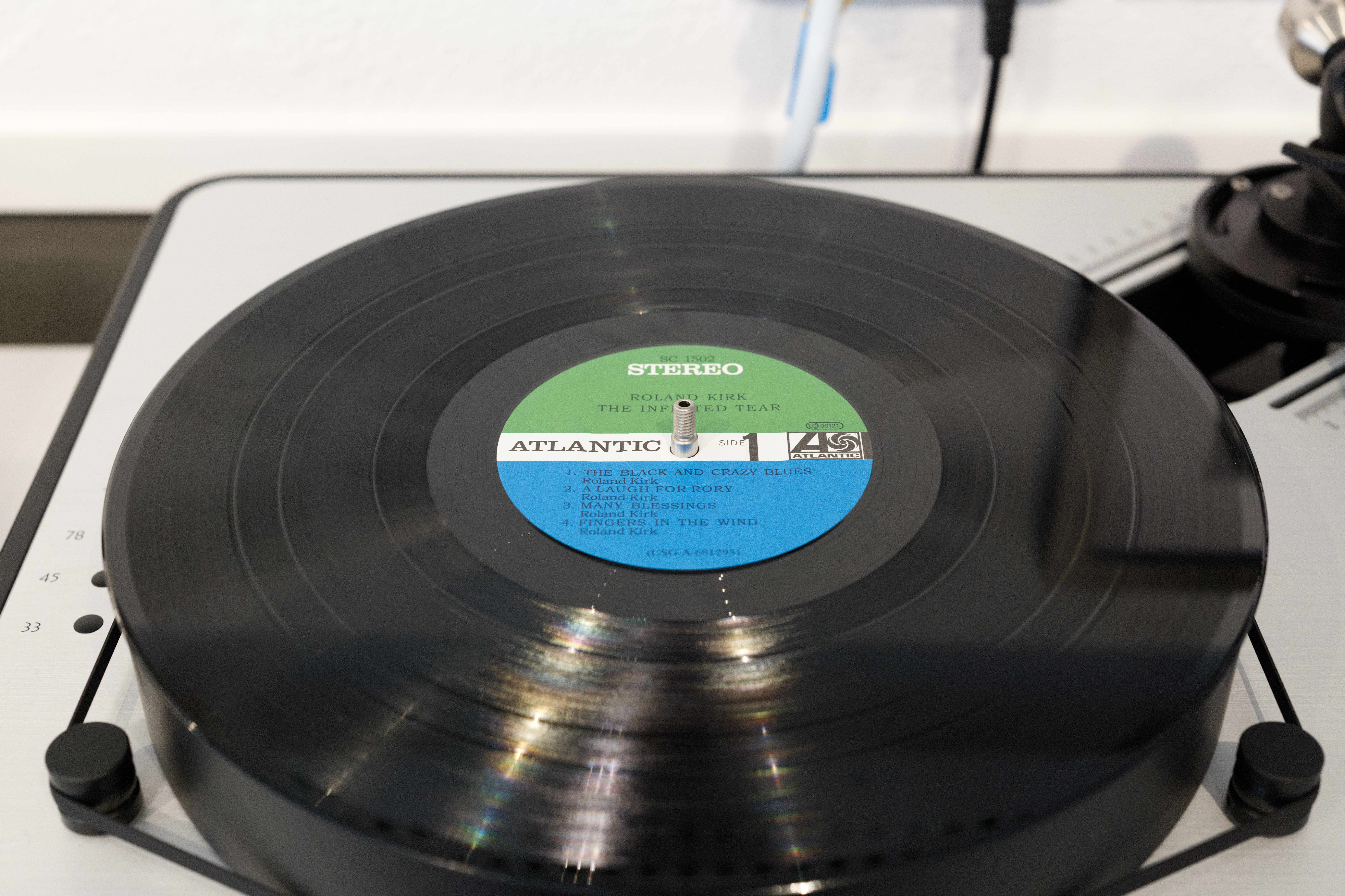
Before the tonearm descends, the vinyl reveals much about the care of its manufacture, and here the pressing shows itself at its best. On the light balance the disc lies perfectly flat, without the faintest warp that would later give the arm work to do, and the surface comes out of the packaging so clean that a wash before the first listen proves unnecessary. Only at the edge does a small reservation announce itself, for the rim of the pressing would have deserved finer finishing, perceptible under the fingernail, hardly visible though. The centre hole, too, calls for a small qualification, dimensioned minimally too generously and therefore not quite centred on the platter, which stays within limits for a recording of this age. Noise between the grooves remains unobtrusive, a quiet background hiss that accompanies without noticeably getting in the way of the sound picture.
SOUND QUALITY
From the first entry, the fine detail of this pressing determines how close one comes to that recording session in the New York studio, and the answer turns out mixed. The dynamics between Kirk’s quietest phrasings and the passages in which he opens several horns at once follow cleanly and without delay, so that every change remains palpable in its onset, without the system ever beginning to strain. The recording reaches its limit of resolution where double bass and piano push into the same frequency range, an overlaying of two voices that can only be separated with patience and marks the limits of this otherwise readily transparent recording.
The stage itself tells the real story of this studio session. Ron Burton’s piano stands at left, drawn entirely into a single point, because the miking captured each instrument of the band individually in mono. Roland Kirk occupies the centre, in place of a voice the true centre of an album without singing, while on the right Jimmy Hopps answers him at the drums, likewise fixed on a single point, and Steve Novosel’s bass ordinarily takes its place on the left. This layout of nothing but mono-captured individual sources, only afterwards distributed across the stereo picture, leaves the stage less room in width and depth than the recording might otherwise have allowed, a limitation owed more to the year of recording than to the present pressing. Where individual sound sources are to be located, the system nevertheless manages this reliably; only the centre occasionally begins to wander.
Tonally, the bass remains slightly reserved, while the treble in places pushes too far into the foreground, two departures from balance that make themselves felt across the side. The bass itself leads with good control and a dry tone, its depth deliberately reined in, and only in individual titles does its position lose itself somewhat in blur. The midrange, by contrast, turns out velvety, with clear contour and the necessary pressure to carry Kirk’s wind instruments with weight, while the treble keeps abandoning this calm and tipping into hardness and edge, where cymbals and the upper registers of the horns meet.
Whoever holds out until the penultimate piece hears in “Fly by Night” what this recording is capable of when it gets out of its own way. The bass, otherwise placed at left, moves for this one title to the right and takes the lead with a solo that presses forward and sets the foot tapping in time even as one listens, a moment in which joy of playing and recording coincide completely for an instant. What this record remains sonically in debt, it makes up for here musically.
What remains is the impression of a recording that shows more musical facets than the recording technology of the time was willing to concede sonically, and which makes its peace with this limit even when the listener is not yet quite ready to do so.
MUSICAL CONTEXT
Within an oeuvre that otherwise lives on abundance, “The Inflated Tear” conspicuously holds back, and it is precisely in this restraint that its significance for Kirk’s discography lies. Where on stage he carried several horns at once and surprised an audience with the sheer quantity of his means, here he forgoes the gesture and lets nine pieces speak instead out of blues, spiritual and that modernism which had always underpinned his playing. Many who have engaged with his work count precisely this quieter album among his most personal statements to this day, a counter-image to the picture of the entertainer that his own virtuosity otherwise readily imposed on him.
ASSESSMENT
In the end stands an album whose substance is never in question and whose technical execution shows in near-flawless material quality, only at the rim and the centre hole with that small negligence that is quickly forgiven. The packaging remains deliberately slim and leaves all available room to the music, which seldom harms the cause but withholds from the object in the hand the additional gesture. Sonically, this pressing shows a recording that convinces in midrange and control, yet suffers in spatiality under the conditions of its origin and occasionally overshoots in the treble, while in its musical core, especially where bass and drums may take the lead, it shows no weakness.
CONCLUSION AND PURCHASE RECOMMENDATION
The restraint that at the start of this text was still posed as a question proves at the end to be the album’s real strength: Kirk places his entire toolkit, from tenor saxophone via manzello and stritch to clarinet and flute, in the service of the nine pieces instead of displaying it as on stage, and a band that listens to him carries him in doing so. The tear that gives the album its name never falls, and precisely therein lies its effect, while the present pressing meets this quiet claim with a clean, if not flawless, material quality and a sound picture that honestly shows its limits from the year of recording instead of concealing them. Whoever does not yet have this chapter of Kirk’s work on the shelf will find in this edition an honest way in, even if the pressing-plant record of this one copy did not open itself to the editorial team quite as freely as the parcel itself did on the morning of its arrival.